Art Basel Qatar: Authority, Intention, and the Work of Becoming
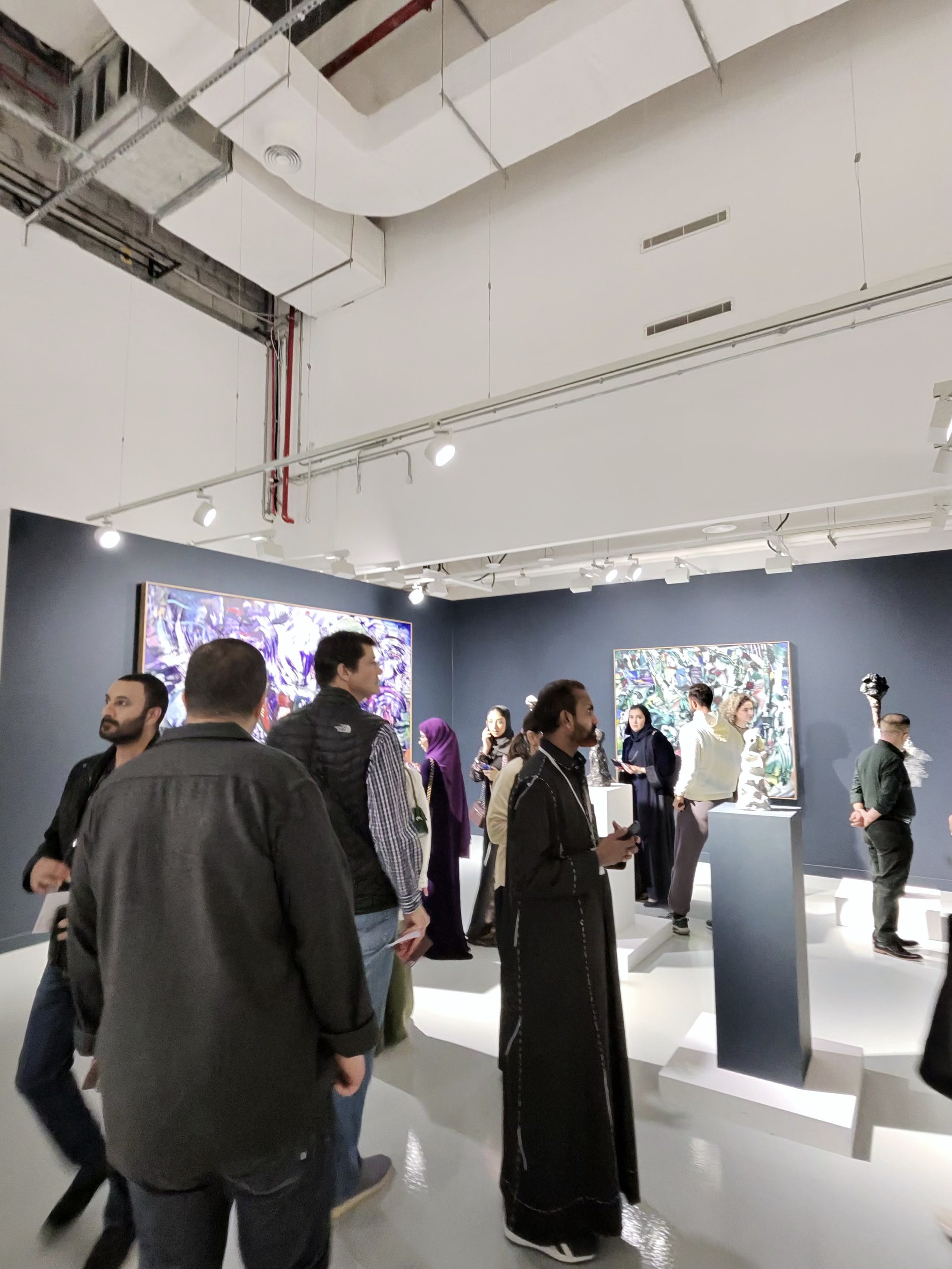
Art Basel’s inaugural edition in Qatar unfolded less as a spectacle and more as a study in placement — of art, of dialogue, and of intention.
Over the course of the fair, what became increasingly clear was that this was not an event designed to overwhelm. Instead, it invited visitors to move deliberately: between galleries, conversations, and installations that extended beyond the fair itself and into the city. The experience rewarded attention rather than urgency.
At M7, where a concentrated group of galleries and conversations came together, the emphasis was on depth rather than density. Works were given space to breathe, and that spatial generosity extended into the programming itself. Conversations with curators and artists repeatedly returned to themes of responsibility — how work is contextualized, how histories are acknowledged, and how future audiences are considered. These were not decorative dialogues, but thoughtful exchanges grounded in long-term cultural thinking.
The Doha Design District further expanded this dialogue, situating contemporary practice within a broader ecosystem of design, architecture, and public life. Moving between these spaces underscored the fair’s interest in continuity rather than containment — in allowing art to exist across disciplines and environments.
Several works stood out not because of their scale or familiarity, but because of their restraint. Pieces held attention through stillness rather than immediacy, asking viewers to remain present rather than move on. Encountering works by artists whose legacies are often mediated through reproduction underscored the importance of proximity — of seeing material, texture, and gesture in real space rather than flattened through screens.
What distinguished this inaugural edition most, however, was how the fair extended across the city. Installations woven into Doha’s urban landscape created a porous boundary between exhibition spaces and everyday life. Art was not isolated from the city but embedded within it, encouraging an ongoing dialogue between contemporary practice and place.
Rather than attempting to define itself fully, Art Basel Qatar embraced a state of emergence. There was no insistence on resolution or declaration. Instead, the fair positioned itself as a beginning — one shaped by listening, careful placement, and an understanding that cultural authority is built over time.
Further in-depth coverage from Art Basel Qatar — including extended conversations, curatorial highlights, and closer examinations of standout works and moments across M7, the Doha Design District, and city-wide installations — will be featured in the upcoming Spring issue of Xposure. Additional visual essays and reflections will be published in the coming days across digital platforms.
As the final day came to a close, the prevailing impression was not one of completion, but of possibility. What began here does not end with the fair’s close — it continues through dialogue, documentation, and sustained attention.
In choosing to begin quietly, Art Basel Qatar signaled something important: that becoming, when approached with intention, can be more powerful than arrival.