Chanel’s New Chapter: Texture, Freedom, and Modern Elegance Define Today’s Paris Runway
Paris Fashion Week delivered one of its most anticipated moments today as Chanel unveiled its latest collection, marking another defining step in the house’s evolving identity under creative director Matthieu Blazy. Presented before a star-studded audience and framed by the grandeur that has long accompanied the Parisian maison’s shows, the runway blended heritage and experimentation in equal measure.
Blazy’s vision for Chanel has quickly become clear: honor the codes that built the house while pushing them toward a more contemporary, tactile expression. Rather than relying on spectacle alone, the collection leaned heavily into craftsmanship and texture, allowing the garments themselves to carry the narrative.
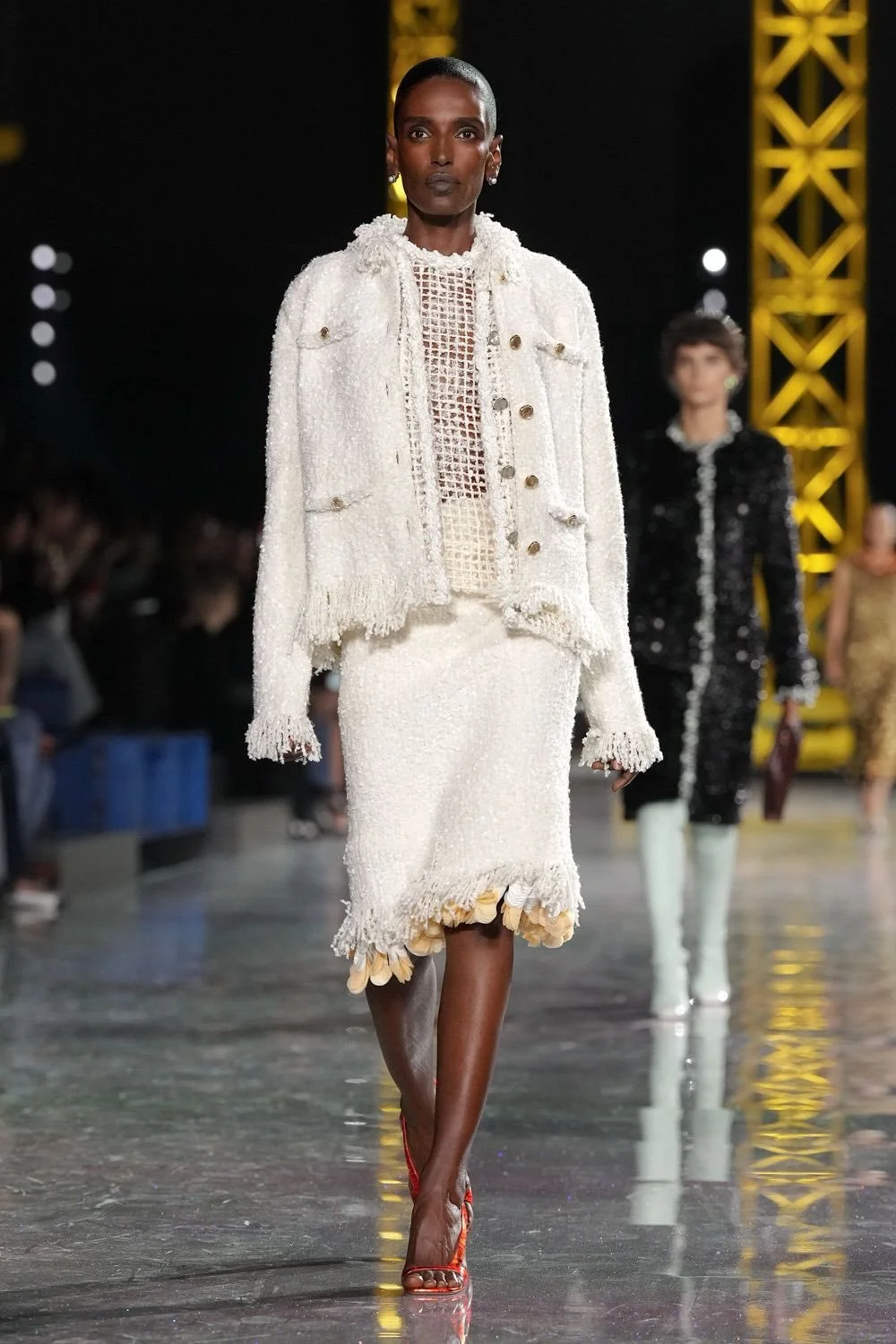
The opening looks set the tone with a modern interpretation of Chanel’s most recognizable signature—the tweed suit. One standout ensemble featured an ivory tweed jacket and skirt finished with delicate fringe edges, layered over a sheer woven top that added subtle transparency. The look balanced tradition with modernity, reminding viewers that the Chanel suit remains a living symbol of Parisian elegance rather than a relic of fashion history.
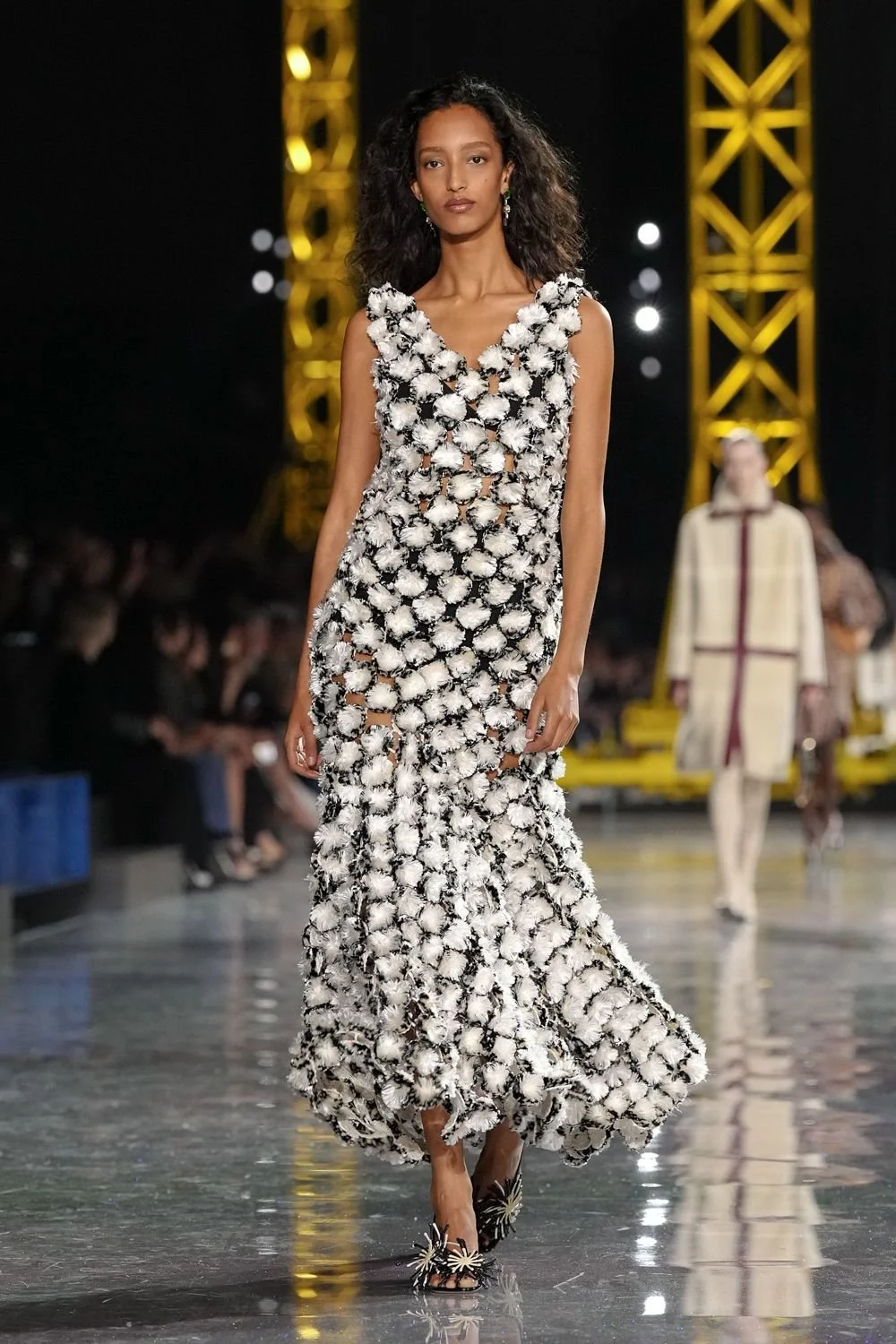
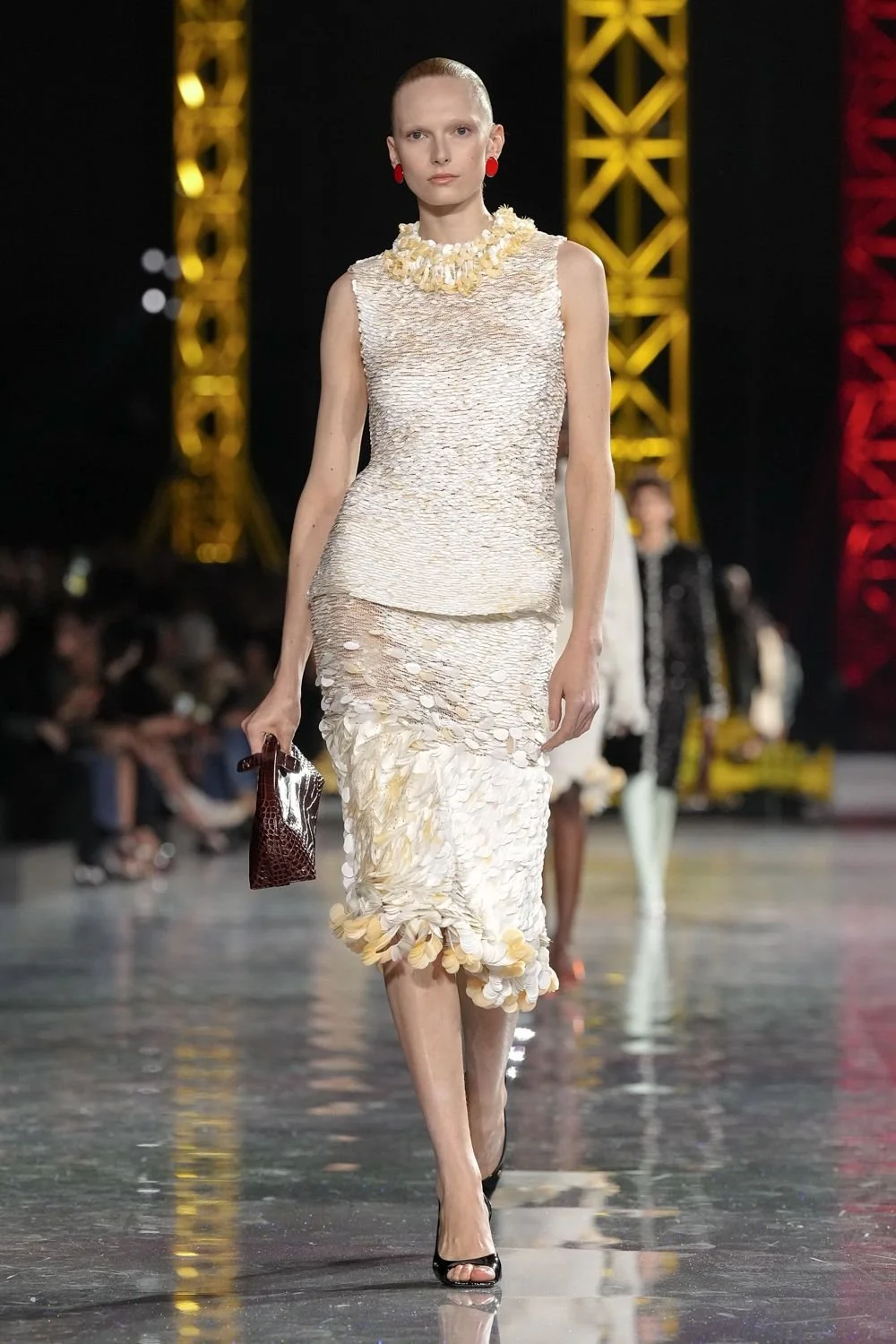
Texture quickly emerged as the show’s defining motif. A sculptural ivory dress layered with petal-like embellishments appeared almost architectural as it moved down the runway. The garment’s intricate surface created a three-dimensional effect, transforming what might have been a simple silhouette into something resembling wearable art.
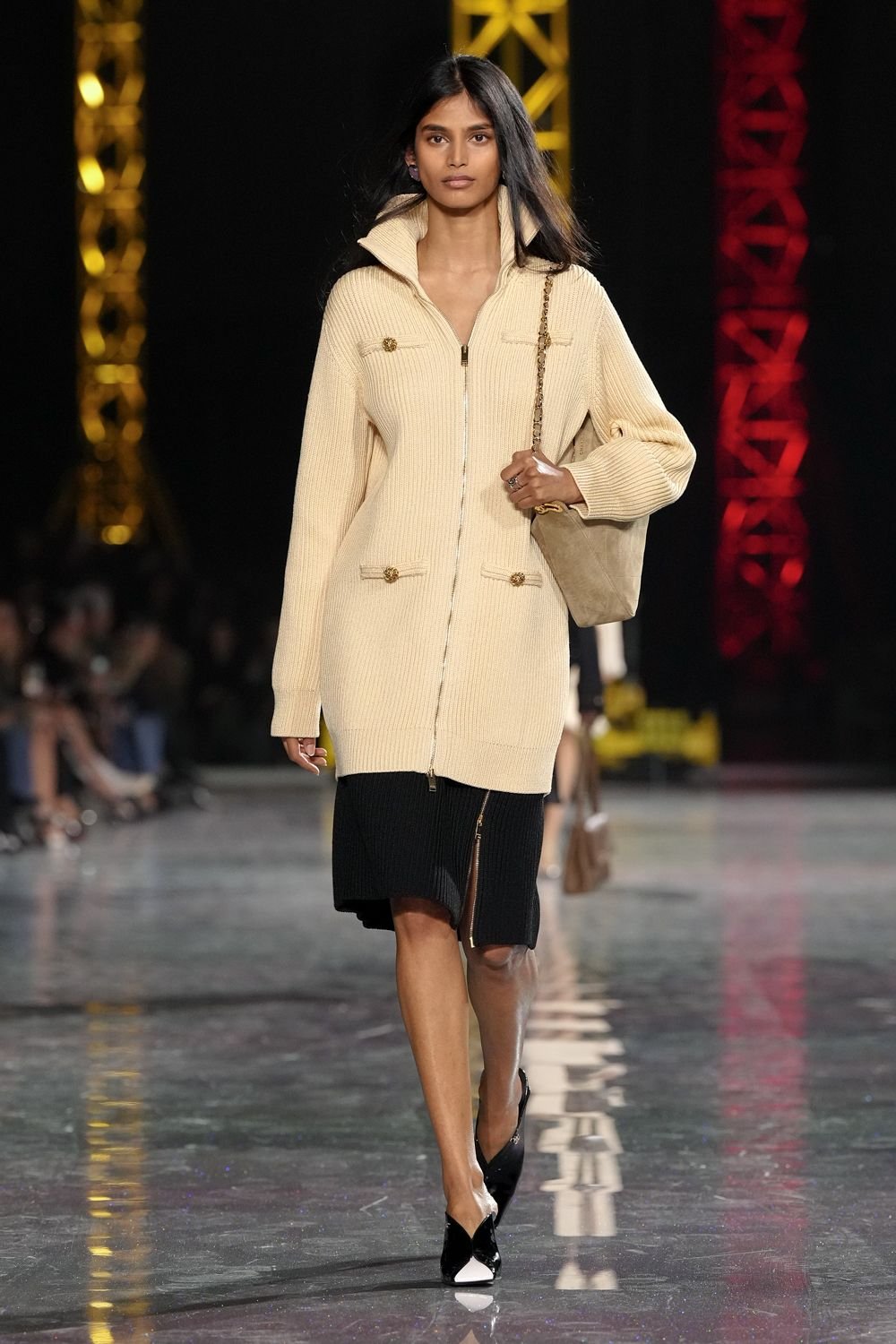
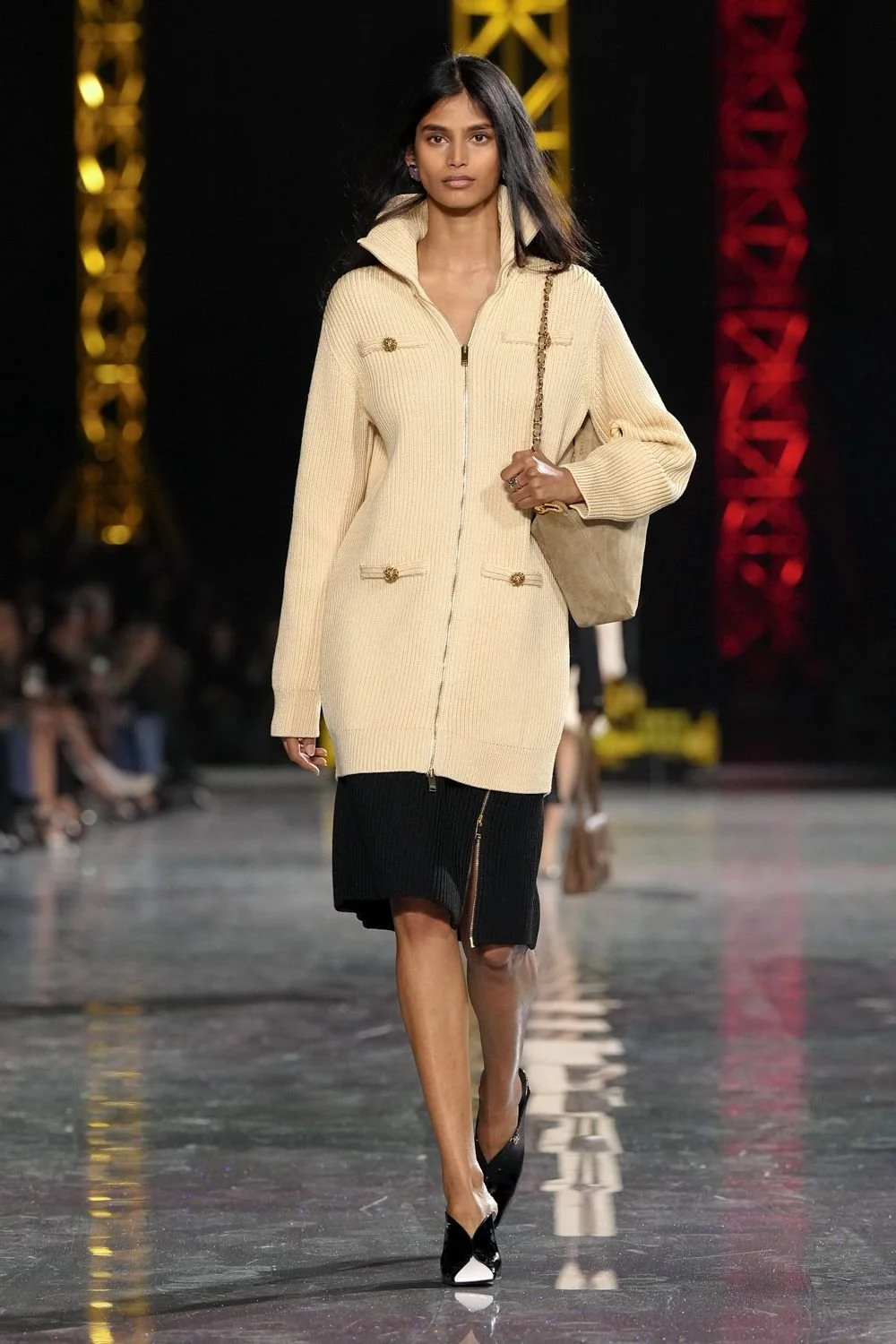
Equally striking was the collection’s exploration of knitwear. A minimalist ribbed zip-front coat, styled as both dress and outerwear, reflected a quieter side of Chanel—one that embraces practicality without sacrificing sophistication. The piece’s elongated proportions and sharp collar embodied the increasingly popular aesthetic of “quiet luxury,” where subtle design choices carry more weight than overt embellishment.
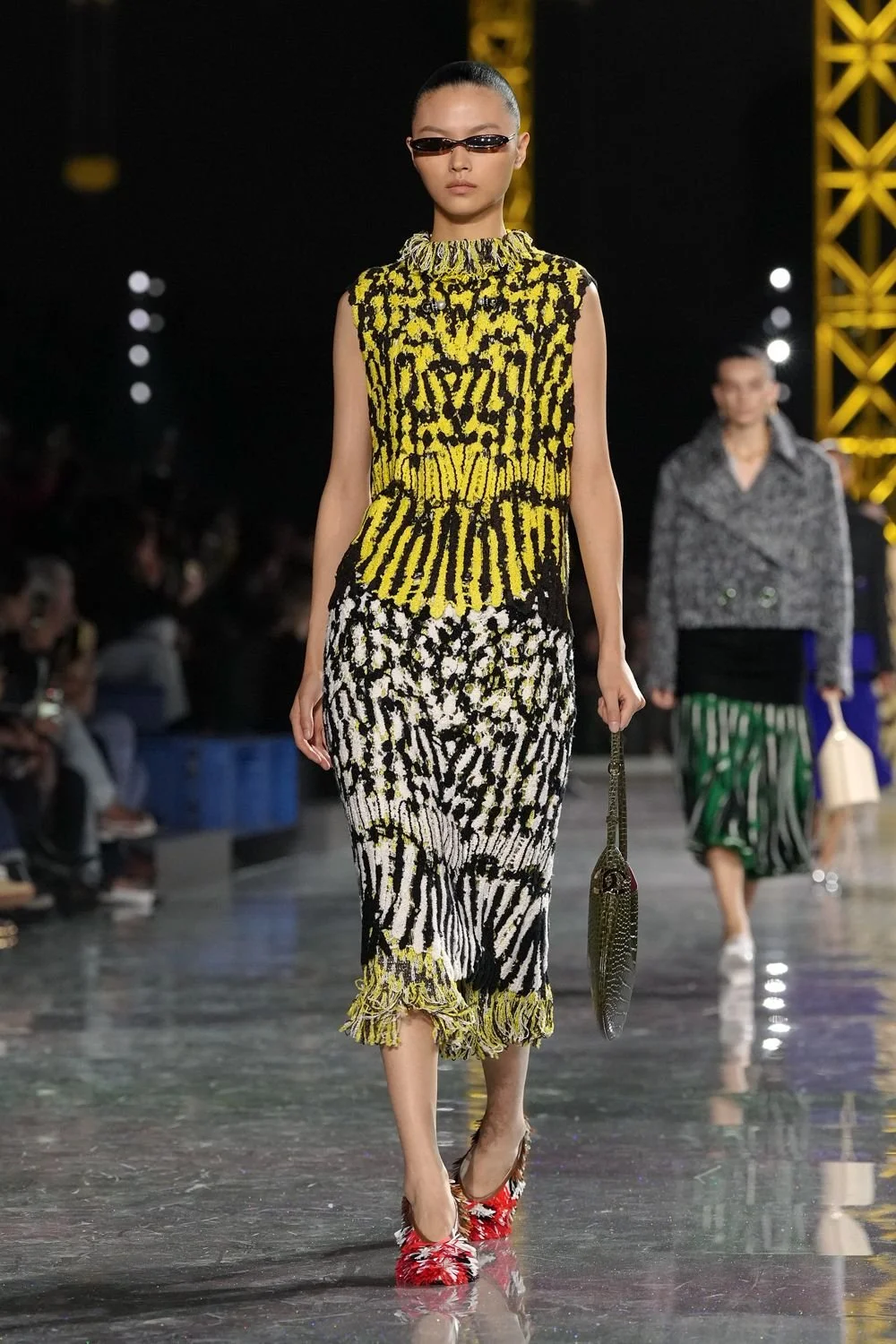
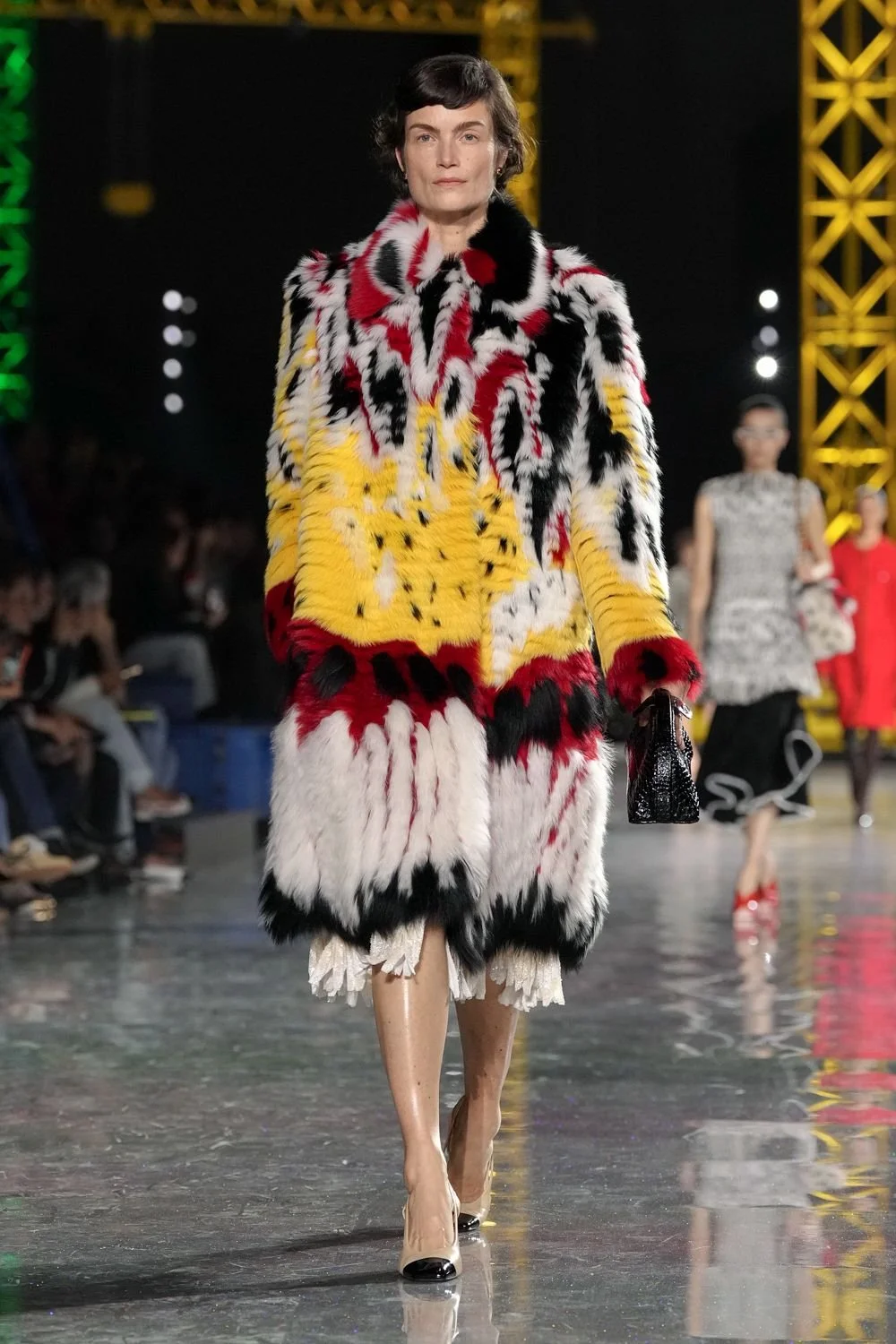
The show also embraced moments of theatrical contrast. One dramatic coat combined red, yellow, black, and white in a graphic patchwork of textures, creating a bold statement against the otherwise restrained palette of creams and neutrals. Despite its visual intensity, the coat maintained a classic silhouette, grounding the piece firmly within Chanel’s timeless design language.
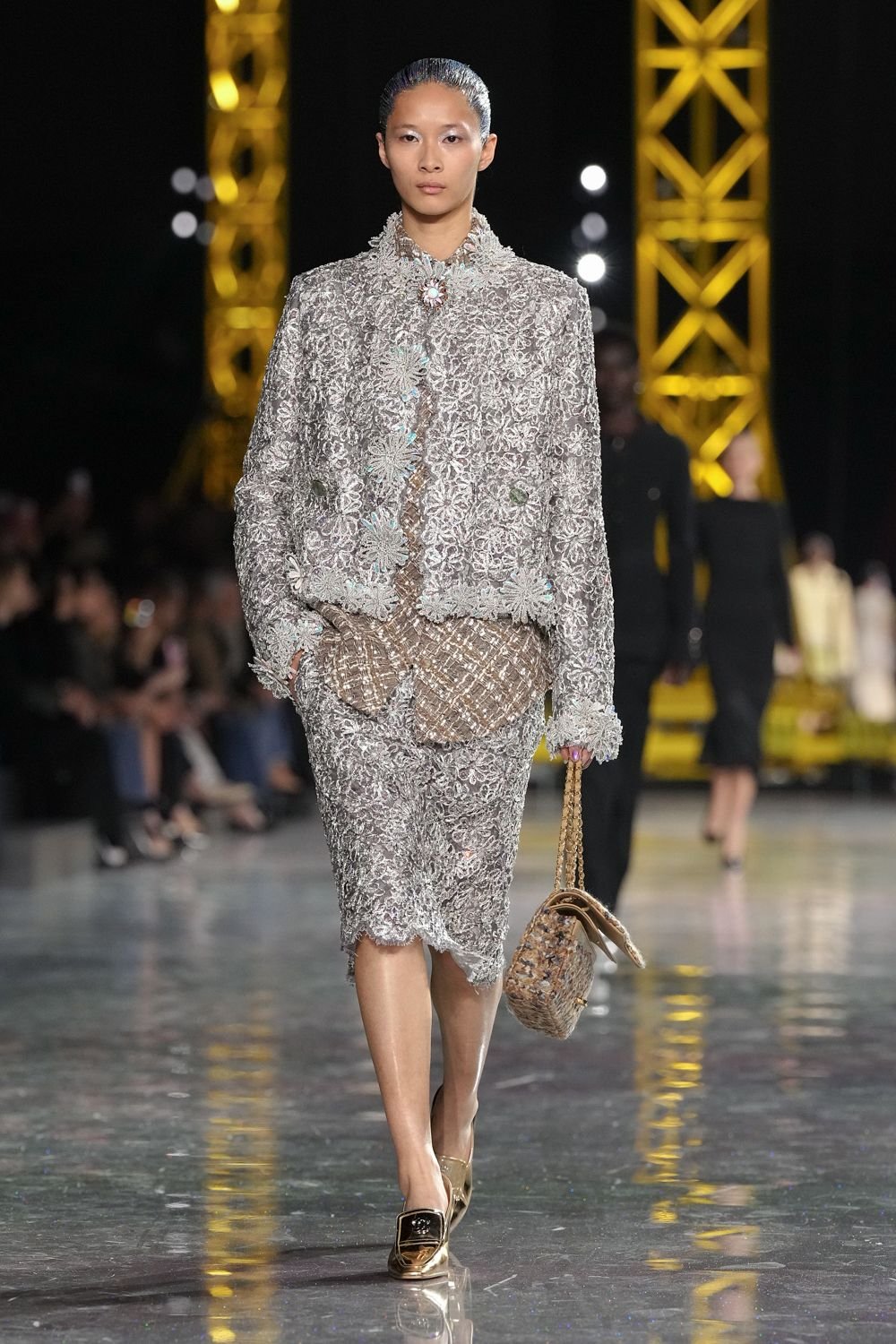
Elsewhere, ornate craftsmanship appeared in the form of metallic lace tailoring. A silver-toned skirt suit shimmered under the runway lights, its delicate fabric resembling fine jewelry woven into cloth. The structured jacket paired with polished accessories—including a chain-handled handbag—bridged couture-level detail with everyday wearability.
Even the eveningwear carried an understated sophistication. One floor-length dress, covered in sculptural rosettes, demonstrated the power of texture over sparkle. Its flowing silhouette moved effortlessly across the runway, reinforcing the collection’s emphasis on fluidity and movement.
Throughout the presentation, Blazy’s approach echoed Gabrielle “Coco” Chanel’s original philosophy: fashion should liberate the body rather than restrict it. Transparency, lightweight fabrics, and nature-inspired embellishments hinted at themes of freedom and ease, reinforcing a vision that feels both modern and unmistakably Chanel.
Celebrity guests—including actors, musicians, and longtime Chanel ambassadors—filled the front row, underscoring the brand’s enduring cultural influence. Yet despite the spectacle, the focus remained squarely on the clothes.
If today’s show is any indication, Chanel’s next chapter will be defined not by radical reinvention but by careful evolution. By emphasizing texture, craftsmanship, and timeless silhouettes, Blazy appears intent on reminding the fashion world that the house’s greatest strength lies in its ability to transform tradition into something newly relevant.
In Paris today, Chanel didn’t abandon its heritage. Instead, it reimagined it—thread by thread.