Christopher Nolan’s The Odyssey Unleashes a Monumental First Trailer—Myth, Scale, and Cinema Reimagined
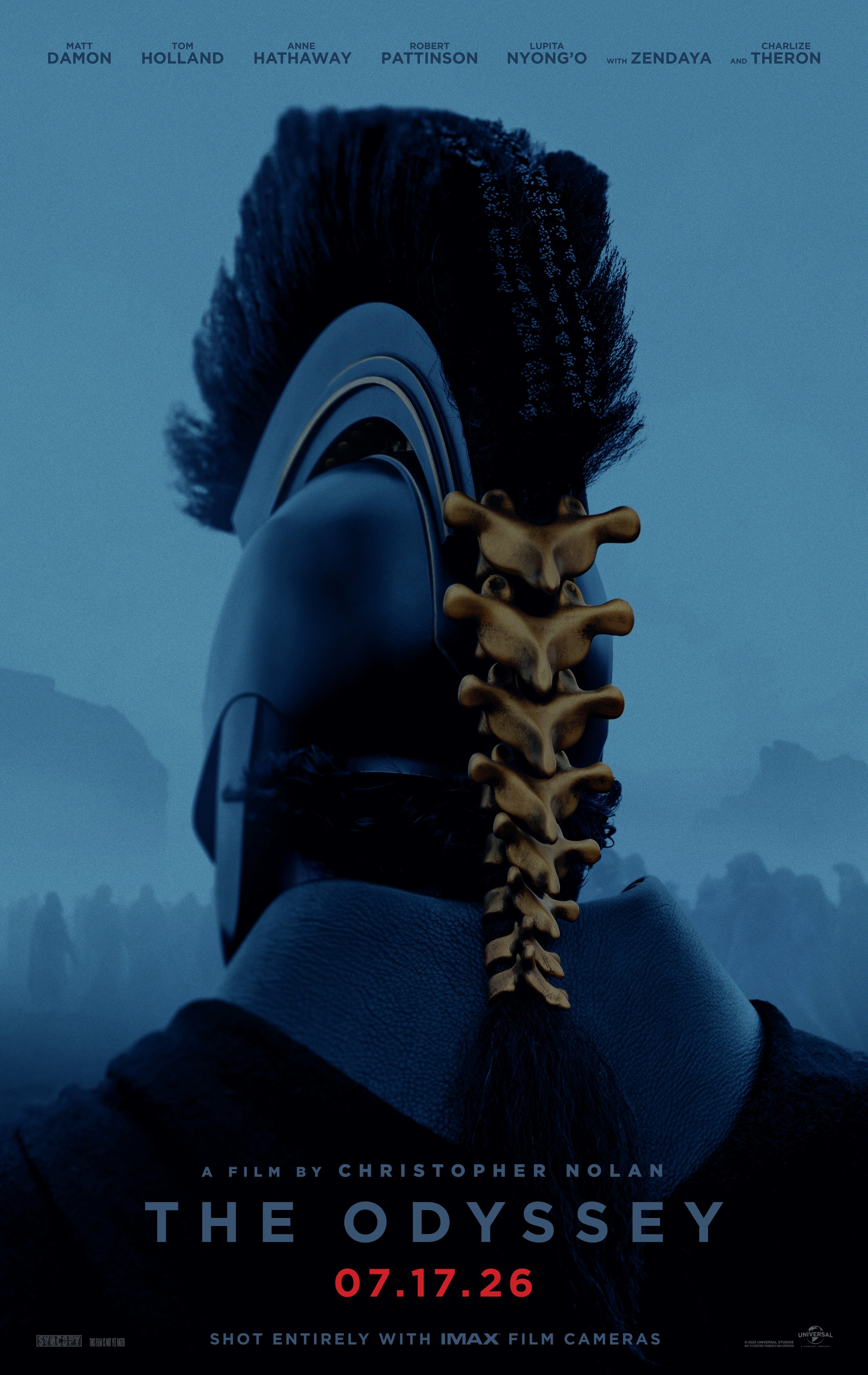
Christopher Nolan has officially entered mythic territory.
The first full trailer for The Odyssey arrives not just as a preview, but as a statement—one that positions the film as Nolan’s most ambitious and visually expansive work to date. Adapted from Homer’s foundational epic, the film transforms one of the oldest stories ever told into a modern cinematic event built for the largest screens possible.
From its opening frames, the trailer establishes scale. Vast oceans. Burning battlefields. Cavernous darkness. Nolan leans fully into spectacle, but never without intention. At the center of it all is Matt Damon as Odysseus, a war-worn king navigating the long and perilous journey home after the Trojan War—a journey defined as much by internal struggle as it is by gods, monsters, and myth.
The footage offers glimpses of the film’s emotional core as well. Tom Holland’s Telemachus searches for a father he barely knows, while Anne Hathaway’s Penelope anchors the story from afar, holding onto hope as time stretches on. Their presence grounds the film, reminding audiences that beneath the scale lies a deeply human story about longing, identity, and return.
Visually, the trailer is unmistakably Nolan. Shot entirely using new IMAX film technology, the imagery feels immersive, tactile, and almost overwhelming in its clarity. Storms crash with weight, landscapes stretch endlessly, and shadowy glimpses of creatures—from looming figures in caves to mythic threats in the open sea—hint at a world where danger is constant and survival is never guaranteed.
The ensemble cast—Robert Pattinson, Lupita Nyong’o, Zendaya, and Charlize Theron—is only briefly revealed, adding to the trailer’s restraint. Rather than overexplain, Nolan chooses suggestion over saturation, letting atmosphere and tone lead the narrative.
And that restraint is what makes the trailer work.
There’s no rush to reveal everything. No attempt to modernize the story beyond recognition. Instead, The Odyssey feels like a return—to epic storytelling, to practical scale, to cinema as an experience meant to be felt, not just watched.
Set for release on July 17, 2026, the film is already being positioned as one of the year’s defining theatrical events—an IMAX-driven spectacle that demands the big screen.
If the trailer is any indication, Nolan isn’t just adapting The Odyssey.
He’s rebuilding it—for a new era of cinema.