EU Ends U.S. Trade Deal, Freezing Transatlantic Relations at a Critical Juncture
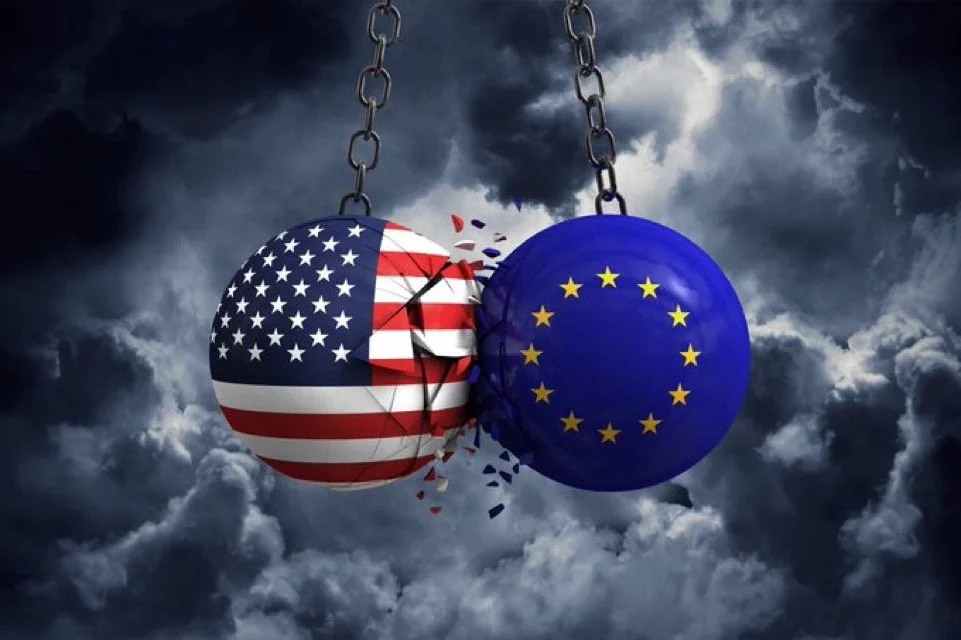
In a dramatic shift in global economic relations, the European Union has formally halted and effectively ended its trade deal with the United States, suspending ratification indefinitely and sending a strong signal that transatlantic commerce has entered a far more uncertain phase. The decision by the European Parliament follows mounting frustration over U.S. tariff threats and what EU officials have described as increasingly coercive trade tactics.
The deal, negotiated in mid-2025, was designed to stabilize EU–U.S. trade by introducing structured tariff adjustments and restoring predictability after years of dispute. Its collapse marks one of the most serious ruptures in economic relations between the two allies in decades.
Why the Deal Collapsed
EU lawmakers moved to freeze the agreement after renewed U.S. warnings of additional tariffs on European goods. These threats, tied to broader geopolitical disputes, undermined confidence in Washington’s commitment to a rules-based trade framework. In response, the European Parliament’s trade committee voted to suspend ratification with no timeline for resumption.
The move does not automatically undo existing trade rules but prevents the deal from becoming legally binding, prolonging uncertainty for exporters, manufacturers, and investors on both sides of the Atlantic.
Immediate Economic Consequences
The suspension places key industries — including automotive manufacturing, aerospace, agriculture, and advanced manufacturing — back into a state of limbo. Companies that had begun preparing for revised tariff structures must now reassess pricing, supply chains, and long-term investment strategies.
European officials have made clear that without a significant shift in U.S. posture, the deal will remain frozen.
Policy Analysis: What the End of the EU–U.S. Trade Deal Signals
The EU’s decision is not merely procedural — it represents a structural change in how Europe approaches economic diplomacy with Washington.
From Partnership to Conditional Engagement
For decades, EU–U.S. trade relations were grounded in presumed alignment. That assumption has eroded. By ending the deal, Brussels is signaling that future cooperation will be conditional on predictability and restraint, even among allies.
Policy takeaway: The EU is prioritizing institutional credibility over short-term economic concessions.
Strategic Autonomy Becomes Central Policy
This move aligns with the EU’s broader push for strategic autonomy — reducing reliance on any single external market. Europe is accelerating trade diversification through agreements with Latin America, Asia, and emerging markets, repositioning itself as a multi-polar economic actor.
Policy takeaway: Trade diversification is now a core element of EU economic sovereignty, not a contingency plan.
Implications for the United States
For Washington, the breakdown highlights the limits of tariff-driven negotiation. While effective domestically, such tactics risk pushing allies toward alternative trade frameworks, weakening U.S. influence over global standards, supply-chain governance, and economic coordination.
Policy takeaway: Overuse of economic pressure may be diminishing U.S. leverage rather than strengthening it.
Escalation Risks and the ‘Trade Bazooka’
The EU’s readiness to deploy its Anti-Coercion Instrument — designed to counter economic pressure — represents a major policy evolution. Its potential use against the U.S. underscores how far relations have shifted.
Policy takeaway: Economic retaliation tools are no longer reserved for rivals alone.
What Happens Next
Policymakers now face three possible paths:
De-escalation, with renewed talks and tariff rollbacks
Prolonged stalemate, extending market uncertainty
Fragmentation, as parallel trade blocs solidify
The direction will depend on whether both sides can recalibrate before political cycles harden positions further.
A Defining Moment for Transatlantic Trade
The end of the EU–U.S. trade deal is a pivotal moment — one that reflects how deeply geopolitics now shapes economic policy. As alliances become more transactional and global power more diffuse, trust and predictability are emerging as the true currencies of trade.
Whether this moment leads to reconciliation or long-term fragmentation will define the future of transatlantic economic relations for years to come.