JAY-Z30: One Last Night, Three Decades and a West Coast Salute at SoFi Stadium
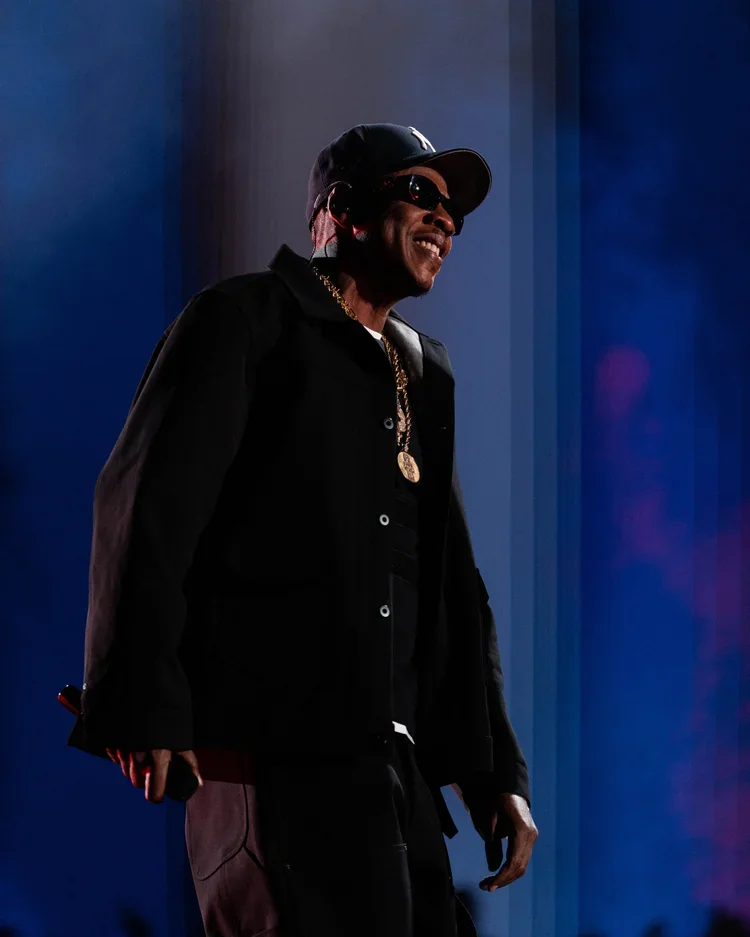
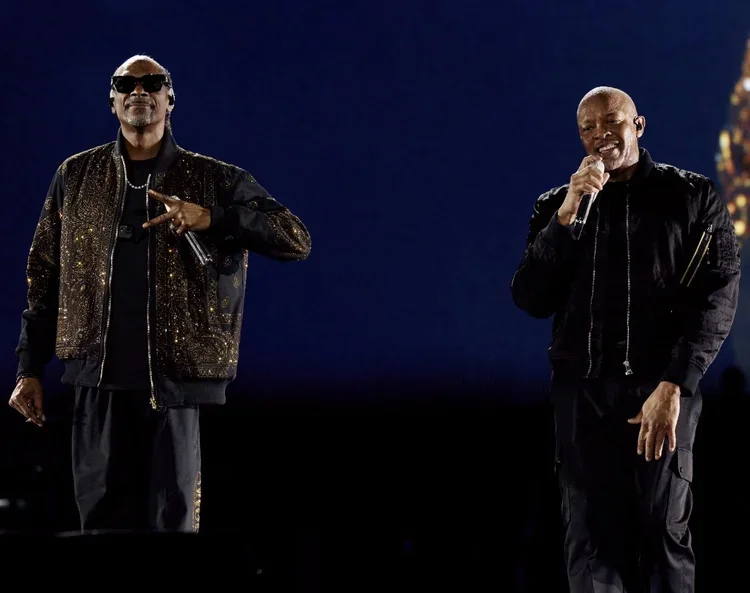
With Dr. Dre, Snoop Dogg and Too $hort joining the celebration, JAY-Z brought his anniversary concert series to a close in Inglewood, California, honoring the music, relationships and cultural history that helped shape his career.
By Goldyn P. Smith | Xposure Magazine
INGLEWOOD, CALIFORNIA | OCTOBER 24, 2026
Thirty years after Reasonable Doubt introduced the world to Shawn Carter, JAY-Z stood inside SoFi Stadium on Saturday night with an extraordinary catalog behind him and an audience ready to revisit it. The second of two Los Angeles performances marked the conclusion of JAY-Z30, a yearlong celebration that had already traveled through Philadelphia, New York, London and Paris. For its final chapter, the Brooklyn-born artist turned toward the West Coast, bringing some of California’s most recognizable voices into a concert that was as much about hip-hop’s shared history as his own.
Xposure Magazine was inside SoFi Stadium for the October 24 performance, continuing our coverage of JAY-Z’s anniversary year and the creative evolution explored in our Fall 2026 cover story, The Life, Times & Rhymes Between Headlines. After months of revisiting the music through JAY-Z IN 8, the eight-part series featuring conversations with Rick Rubin, the opportunity to experience those records in a stadium offered another perspective. Songs discussed through memory and reflection were now being performed before thousands of people whose own lives had unfolded alongside them.
The evening opened with “The Watcher 2,” an appropriate selection for a concert that would eventually welcome Dr. Dre to the stage. Before long, Too $hort arrived for “Blow the Whistle,” bringing the unmistakable energy of the Bay Area into Inglewood. The appearance established an important distinction between Saturday’s show and a conventional career retrospective. JAY-Z was not simply inviting famous friends to share the spotlight. He was acknowledging the musical communities, regional identities and creative relationships that have intersected with his work for decades.
From there, the performance moved freely through different periods of his catalog. “Izzo (H.O.V.A.),” “Run This Town,” “U Don’t Know,” “Dirt Off Your Shoulder” and “On to the Next One” represented the commanding public persona that helped make JAY-Z one of hip-hop’s most influential figures. Yet the setlist also made room for records that reveal a different kind of artist. “Never Change,” “Song Cry,” “Dead Presidents” and “D’Evils” returned the evening to the personal histories, complicated loyalties and emotional contradictions that have always existed beneath the commercial success.
Those selections carried particular significance following JAY-Z IN 8. Throughout the series, JAY-Z and Rubin explored the experiences behind the records, examining how ambition, grief, relationships and personal growth shaped the writing. Saturday’s performance demonstrated something that cannot be fully captured in a studio conversation: the way a song can acquire new meaning when the person who wrote it has lived another twenty or thirty years.
Los Angeles became an even more central presence when JAY-Z honored the late Nipsey Hussle. The tribute incorporated Hussle’s music into the performance, including elements of “Hussle & Motivate” and “Last Time That I Checc’d.” A photograph of the Los Angeles rapper appeared on the stadium screens, acknowledging an artist whose influence extended far beyond his recordings. It was a reminder that hip-hop’s history is not exclusively preserved through its surviving legends. It also lives through the people whose contributions continue to shape their communities after they are gone.
The evening’s defining guest sequence arrived with Snoop Dogg and Dr. Dre. Snoop’s performance of “Murder Was the Case” gave way to a succession of West Coast classics, including “The Next Episode,” “California Love,” “Nuthin’ but a ‘G’ Thang” and “Still D.R.E.” The moment connected two distinct but overlapping histories: the rise of West Coast rap as a dominant cultural force and JAY-Z’s emergence from Brooklyn into an increasingly national, then global, conversation.
There was an additional layer of significance to “Still D.R.E.” JAY-Z famously contributed to the writing of the 1999 recording, making its inclusion more than a familiar crowd-pleaser. It represented one of the many places where his creative influence has extended beyond the records released under his own name. With Dre and Snoop standing beside him, that history became visible onstage.
Saturday’s performance also followed a notable opening night at SoFi Stadium. On Friday, October 23, JAY-Z welcomed Scarface for “This Can’t Be Life” and “Mind Playing Tricks on Me,” while Blue Ivy Carter joined her father on piano for “The Story of O.J.” and “Dead Presidents.” John Legend and DJ Khaled appeared during “GOD DID.” Together, the two concerts reflected the breadth of relationships that have developed around JAY-Z’s music, spanning generations, regions and genres.
The anniversary celebration has also unfolded during a period of renewed attention surrounding JAY-Z’s next professional chapter. His recent performances, the release of JAY-Z IN 8 and continued activity across music and entertainment have invited questions about what comes after JAY-Z30. Yet Saturday’s finale did not require an announcement about the future to justify its significance. The music, the audience and the gathering of artists onstage were enough to demonstrate how much of hip-hop’s history remains connected to his catalog.
There is a temptation to describe a concert like this as a victory lap, particularly when the artist has spent three decades accumulating awards, records and influence. But that description overlooks what makes this anniversary interesting. The songs have survived changes in the music business, shifts in popular taste and transformations in the artist himself. Some remain celebrations of ambition and achievement. Others sound different when performed by a man whose life no longer resembles the circumstances in which they were written.
As the closing stretch moved through “Heart of the City,” “Empire State of Mind,” “Big Pimpin’” and “Public Service Announcement,” the scope of the evening came into focus. These were not simply selections from an extensive discography. They were pieces of a cultural timeline, performed by an artist who has spent much of his career documenting the world around him while helping change it.
For Xposure Magazine, Saturday’s performance was another chapter in a story we have followed throughout 2026. Our Fall anniversary cover examines the life, times and rhymes between the headlines, and SoFi Stadium offered a powerful reminder of why that distinction matters. The public achievements are familiar. The music continues to reveal the experiences, decisions and relationships behind them.
JAY-Z30 may have reached its final performance in Los Angeles, but the larger conversation surrounding Shawn Carter’s music and influence is far from finished. Thirty years after Reasonable Doubt, the catalog is still speaking, the audience is still listening, and the next chapter remains unwritten.