Keep Hope Alive: Honoring Rev. Jesse Jackson, a Life That Reshaped the Moral Imagination of America
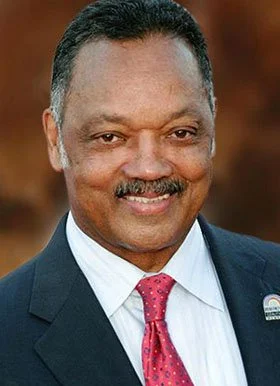
The Rev. Jesse Jackson, one of the most consequential civil rights leaders of the modern era, has died at age 84, leaving behind a legacy that stretched far beyond politics, protest, or public office. He died peacefully surrounded by family, according to statements released Tuesday, closing a chapter on a life defined by relentless advocacy for justice, equality, and human dignity.
Jackson’s influence spanned more than half a century. A protégé of Dr. Martin Luther King Jr., he rose to prominence in the aftermath of King’s assassination and became one of the most recognizable voices in American activism, carrying forward the civil rights movement’s urgency into new generations and new arenas.
A Voice That Carried Across Generations
Jackson’s work was never confined to a single issue or era. He led campaigns addressing voting rights, economic opportunity, healthcare inequities, and education access, advocating consistently for the poor and underrepresented both in the United States and abroad. Through his organizations—Operation PUSH and later the Rainbow PUSH Coalition—he translated protest into policy pressure, pushing corporations and institutions to diversify workforces and expand opportunity.
His family described him as a “servant leader” whose mission extended beyond his own household to people across the world who felt unheard or unseen.
A Political Pioneer
Jackson was also a trailblazer in American politics. His presidential campaigns in 1984 and 1988 broke new ground for Black candidates in major party primaries, reshaping expectations about representation and paving the way for future leaders. Though he never won the nomination, his campaigns shifted the political landscape, demonstrating that grassroots coalition-building could translate into national influence.
His ability to move between the pulpit, the streets, and the political stage became one of his defining traits. He was as comfortable leading a march as he was negotiating with world leaders or speaking before Congress, embodying a rare blend of moral authority and strategic pragmatism.
A Life of Conviction Despite Decline
In recent years, Jackson faced serious health challenges. He had disclosed a Parkinson’s diagnosis in 2017 and was later diagnosed with progressive supranuclear palsy, a rare neurological disorder. Yet even as his physical strength declined, his public presence did not disappear. He continued to appear at protests and civic events, reminding supporters that activism is not a phase of life but a lifelong commitment.
That persistence mirrored the message he repeated throughout his career, often through his famous affirmation: a declaration of dignity meant to remind people of every background that they mattered.
More Than a Leader — A Catalyst
What made Jackson singular was not only his activism but his ability to galvanize belief. He didn’t simply call for change; he persuaded people that change was possible. His speeches carried both urgency and hope, and his presence often signaled that history was still in motion rather than settled.
Public commemorations are expected to take place in Chicago, a city closely tied to his organizing work and institutional legacy.
The Measure of a Life
In the end, Jesse Jackson’s impact cannot be measured solely in legislation, elections, or headlines. It lives in movements he helped ignite, leaders he inspired, and communities he empowered to see themselves as worthy of justice. His life traced a line from the segregated South to the global stage, proving that moral conviction, when paired with relentless action, can alter the course of history.
To honor him is not simply to remember him. It is to continue the work he insisted was unfinished — the long, unfinished work of making freedom real.