Shrinking Season 3 Opens With Consequences, Clarity, and a New Conversation About Living (Review)
This season marks the start of our new weekly review series in partnership with Apple TV — a space where we’ll return every episode to unpack the themes, performances, and quiet emotional turns that make Shrinking resonate long after the credits roll. Season 3 opens with bigger questions than ever, and Episode 301 makes it immediately clear this show is no longer interested in easy answers.
Season 3 of Shrinking doesn’t ease its way back in. It opens with intention, consequence, and a quiet understanding that growth is no longer theoretical for these characters — it’s required. Episode 301, titled My Bad, sets the tone for what feels like the show’s most reflective chapter yet, grounding its humor in lived-in wisdom and its emotion in hard-earned perspective.
The episode begins with a line that feels less like dialogue and more like a thesis: “If you’re not growing, you’re not living.” What follows is a perfectly judged opening sequence underscored by a needle drop from Simply Red, as Dr. Paul moves through his familiar morning routine. It’s domestic, calm, and precise — until Paul tells us plainly that it’s not a good day. That small admission carries the weight of everything Shrinking is now willing to confront head-on.
Michael J. Fox and the Power of Recognition
Just minutes into the episode, Paul finds himself in the lobby of a neurologist’s office, where he meets Jerry, a fellow Parkinson’s patient played by Michael J. Fox. The casting is inspired, but it’s Fox’s performance that quietly steals the episode. There’s no grand entrance, no sentimentality, no self-awareness that breaks the spell. Instead, Jerry feels immediately real — warm, sharp, funny, and deeply honest.
The conversation between Paul and Jerry unfolds with the ease of two old friends, despite having just met. They talk about symptoms, progression, fear, and adaptation, but what lingers is the relief of being understood without explanation. Fox brings an endearing, deeply relatable presence to the role, offering wisdom without preaching and humor without deflection.
Jerry leaves Paul with a hard-earned perspective that quickly crystallizes into the mantra Paul adopts for himself. The longer reflection is blunt, funny, and unsparing — but the version that sticks, the one Paul carries forward, is simple and defiant:
F— Parkinson’s.
It isn’t denial or bravado. It’s a refusal to let the disease dictate the tone of whatever life remains.
Paul’s Shift and Jimmy’s Reckoning
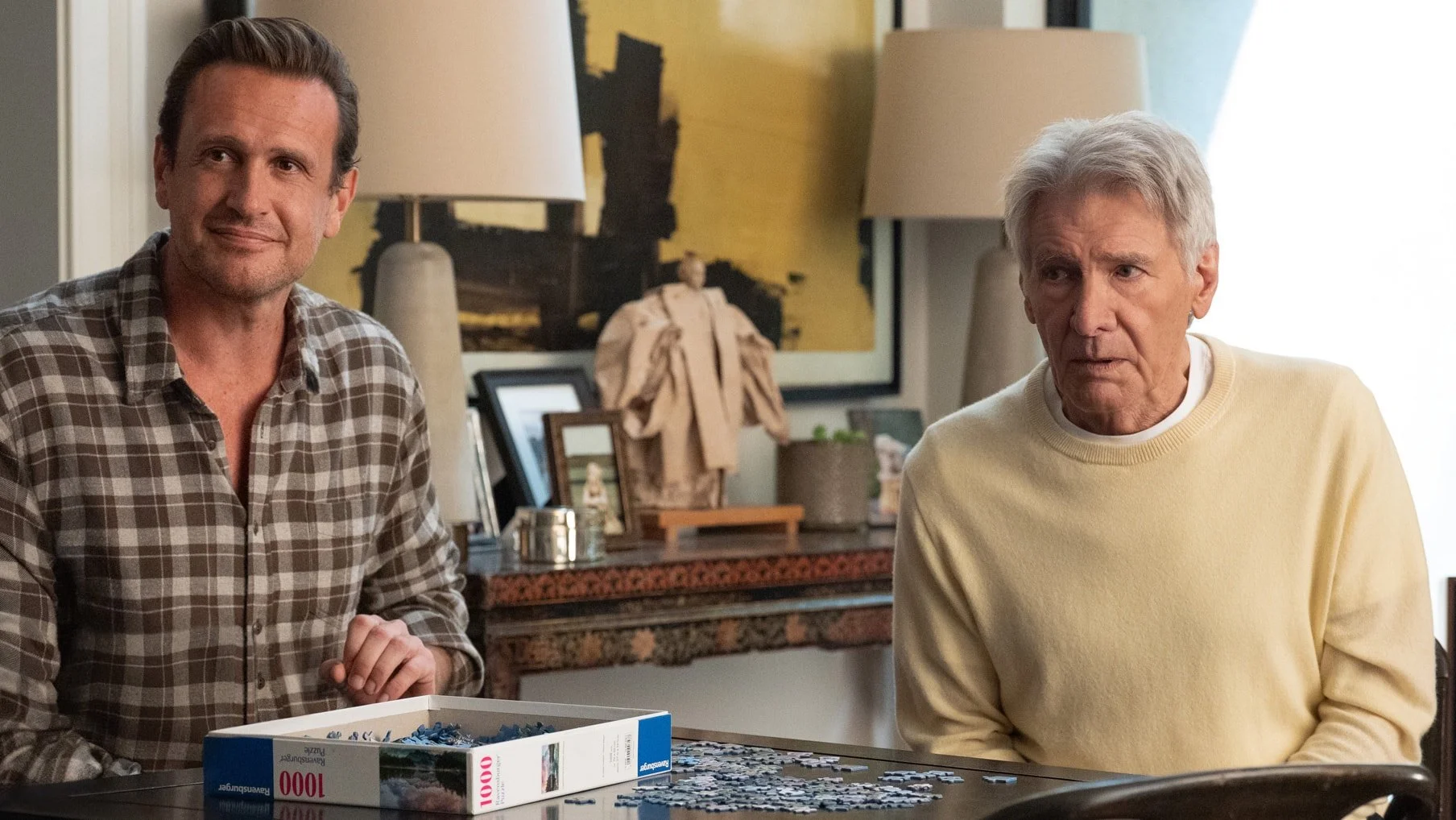
Paul brings this new mantra with him into the rest of the episode, most notably when he shares it with Jimmy and promptly takes him on an absolutely unhinged ride. Harrison Ford continues to find extraordinary nuance in Paul’s restraint, but what’s changed is his openness. He’s no longer guarding his fear. He’s naming it.
That honesty ripples outward. Jimmy, once protected by the belief that saying the right thing loudly enough could fix everything, is now forced to sit with the consequences of that approach. Jason Segel plays him with quieter tension this time — less chaos, more reckoning. Shrinking is no longer asking whether honesty works. It’s asking what it costs.
Life Continuing, Even When You’re Afraid
Around these heavier beats, the ensemble continues living — not as comic relief, but as contrast. Gaby wakes up with her new love interest and wonders aloud if she should be doing more. Brian and Charlie build a nursery that represents both hope and uncertainty. Liz and Derek take their daily neighborhood stroll, colliding with Pam in a moment that reminds us how humor in this show often arrives through familiarity.
Sean’s conversation with Alice quietly becomes one of the episode’s most meaningful moments. As Alice faces the uncertainty of life after graduation, Sean helps her name a fear she hasn’t fully confronted — the voice that tries to convince you to doubt what could be great before you ever begin. He doesn’t offer certainty or solutions. He offers permission to move forward anyway.
Gaby’s lingering uncertainty — knowing you should take the next step but being afraid to do it — echoes across the group. Growth here isn’t dramatic. It’s incremental. It’s choosing motion when stagnation feels safer.
A Season That Knows What It’s Saying
What makes My Bad such a strong season opener is its confidence. The episode doesn’t chase laughs or manufacture catharsis. It trusts its characters, its audience, and the space between moments. The humor remains, but it now serves something deeper — a conversation about how to live when answers don’t arrive neatly.
Michael J. Fox’s presence crystallizes that idea beautifully. His performance isn’t symbolic; it’s human. And in a show increasingly interested in what comes after the breakthrough, that humanity matters.
Join us every week as we continue our episode-by-episode reviews of Shrinking, breaking down the moments, performances, and themes that make this series feel so lived-in and essential. Season 3 has something to say — and we’ll be here for every conversation that follows.