ATLiens at 30: The Album That Took Atlanta to Another Galaxy and Brought Hip-Hop Along With It
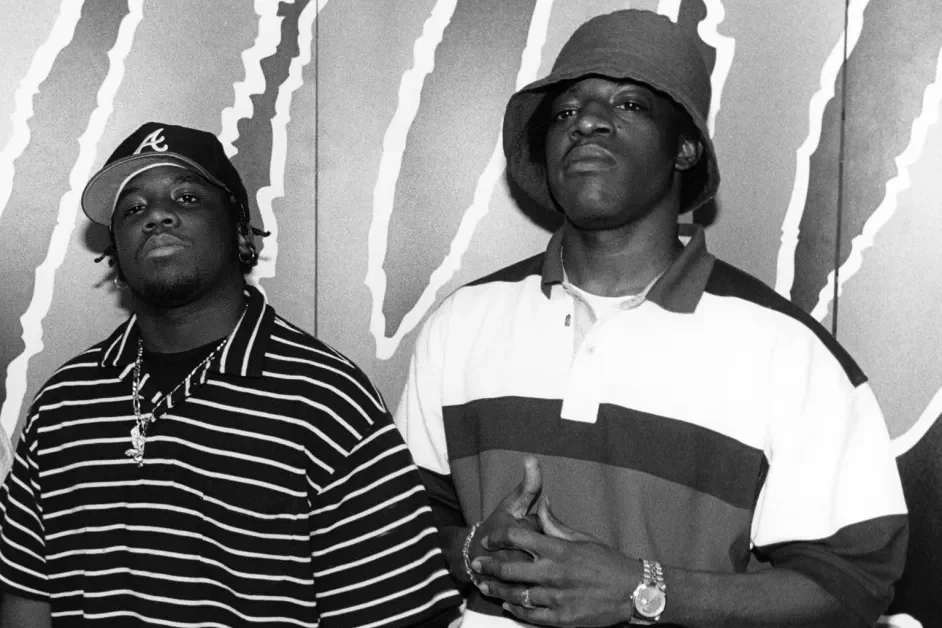
Thirty years ago, Outkast looked toward the stars without ever taking their feet off Atlanta soil.
Released August 27, 1996, ATLiens was more than André 3000 and Big Boi’s sophomore album. It was a declaration of artistic independence, a meditation on growing up and a pivotal chapter in the story of Atlanta becoming one of the most important cultural capitals in modern music.
For those of us from Atlanta, however, ATLiens means something even deeper. We understood the language. We knew the places. We knew the Cadillacs, red clay, MARTA rides, neighborhoods, slang, bass, churches, cookouts and contradictions underneath all that talk about extraterrestrials and outer space. The rest of the world heard something futuristic, while Atlanta heard home. Somehow, Outkast made both true at the same time.
The South Had Something to Say. ATLiens Showed Them What.
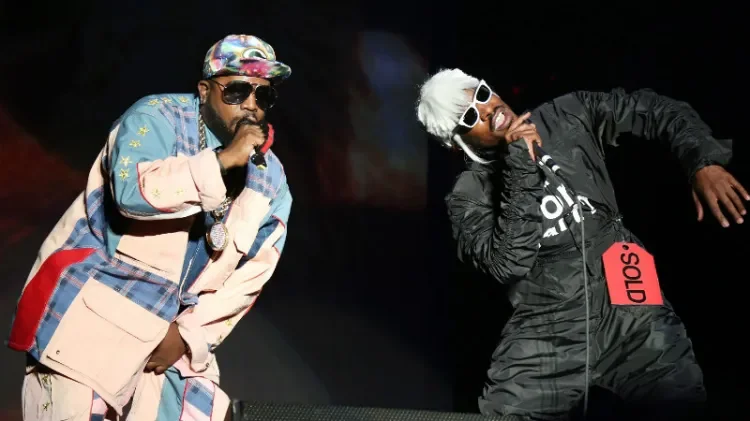
The story of ATLiens cannot be separated from what happened one year earlier.
At the 1995 Source Awards in New York, Outkast walked into a hip-hop culture dominated by an increasingly intense East Coast-West Coast rivalry. When the Atlanta duo won Best New Rap Group, portions of the audience booed. André Benjamin stepped to the microphone and delivered a sentence that would eventually become prophetic: the South had something to say.
It is difficult, from the vantage point of 2026, to fully appreciate how radical that declaration was. Today, Atlanta’s fingerprints are everywhere. Our artists, producers, executives, songwriters and entrepreneurs have influenced generations of popular music. Atlanta has produced global superstars, independent empires and sounds that have traveled from Bankhead, College Park, East Point, Decatur and the Southside into clubs, arenas and headphones around the world.
But that dominance was not guaranteed in 1996. Southern hip-hop was still fighting for respect within an industry that too often treated the region as an afterthought.
ATLiens arrived 30 years ago and transformed André’s declaration into evidence. You didn’t have to believe the South had something to say anymore. You simply had to press play.
Atlanta, But Make It Intergalactic
Outkast had already introduced audiences to their Atlanta with Southernplayalisticadillacmuzik in 1994. That album rode through the city with the windows down. It was funky, youthful, distinctly Southern and unapologetically ATL.
ATLiens went somewhere else. The Cadillac was still there, but by ATLiens, it might as well have been a spaceship.
The album’s sound was darker, stranger and more atmospheric. André and Big Boi were growing up, traveling beyond Atlanta and confronting the disorienting reality of becoming successful while still trying to understand themselves. The music reflected that evolution through explorations of spirituality, isolation, poverty, parenthood, temptation, ambition, mortality, fame, Black life and survival.
And still, Atlanta remained at its core.
That is one of ATLiens’ greatest achievements. Outkast proved that being deeply regional did not prevent an artist from being universal. Quite the opposite. Their specificity became their superpower.
They did not dilute Atlanta to make themselves understandable elsewhere. They invited everybody else into Atlanta and expected them to keep up. That decision would eventually become one of the foundations upon which generations of Southern artists built their careers.
The Dungeon Was Building a Universe
You cannot properly celebrate ATLiens without celebrating the ecosystem that helped make it possible. The story runs through the Dungeon Family and Organized Noize, the legendary production team of Rico Wade, Ray Murray and Sleepy Brown.
Before Atlanta became shorthand for a global music industry, there were young artists gathering in a basement in southwest Atlanta, writing, producing, experimenting, competing and imagining possibilities much larger than the room they occupied. That room became mythology, but before it was mythology, it was community.
ATLiens retained Organized Noize’s influence while also marking an important step in Outkast’s development as producers themselves. André, Big Boi and Mr. DJ expanded their creative control, with Outkast producing key records including “Elevators (Me & You)” and the title track. The young men who had entered the Dungeon as rappers were learning how to construct entire sonic worlds.
Three decades later, it is also impossible to discuss this history without remembering the late Rico Wade. His impact reaches far beyond individual production credits. Wade helped create an environment where Atlanta artists could discover who they were before the rest of the industry told them who they were supposed to be.
Look at the family tree that grew from that environment and the magnitude becomes almost overwhelming. ATLiens belongs to Outkast, but it also belongs to a particular moment in Atlanta when collaboration, competition, mentorship and imagination were quietly changing popular culture from a basement.
“Me and You, Your Mama and Your Cousin Too”
Then came “Elevators.”
Few records capture the strange transition from dreaming about success to actually experiencing it quite like “Elevators (Me & You).” Its hypnotic production felt sparse and futuristic, but the storytelling remained intensely human. Success had arrived, but riches were not necessarily falling from the sky. People perceived celebrity differently from the people actually living inside it, and old acquaintances suddenly saw fame where André and Big Boi could still see struggle.
That tension runs throughout ATLiens. They were becoming stars while simultaneously processing what stardom meant.
“Two Dope Boyz (In a Cadillac)” retained the confidence. “Wheelz of Steel” reminded everyone that lyricism remained central. “Jazzy Belle” became one of the album’s signature records, while “Babylon,” “E.T. (Extraterrestrial),” “13th Floor/Growing Old,” “Mainstream” and “Decatur Psalm” pushed the album into deeper examinations of identity, environment, spirituality and survival.
This was not simply music designed to make Atlanta ride. It was Atlanta thinking out loud.
Even the Artwork Told Atlanta’s Story Differently
Before anyone heard the music, ATLiens announced that something unusual was happening through its cover.
Atlanta artist D.L. Warfield, then a creative director at LaFace Records, helped shape the album’s now-iconic visual identity, transforming André and Big Boi into comic-book figures surrounded by an extraterrestrial universe. The packaging even included a comic, extending the album beyond its music into a complete visual experience.
Think about how forward that was in 1996. Outkast was world-building before “world-building” became a standard entertainment-industry phrase. Music, illustration, mythology, fashion, characters and Southern identity were being combined into one visual universe, and once again, Atlanta was at the center of it.
The Numbers Confirmed What Atlanta Already Knew
ATLiens debuted at No. 2 on the Billboard 200 and eventually earned double-platinum certification in the United States, but numbers only explain part of its importance.
Its real accomplishment was possibility.
ATLiens helped dismantle the idea that Southern rappers had to conform to an established coastal sound to receive national respect. Outkast could be Southern without being predictable, Black without being monolithic, street and cerebral, country and cosmic, traditional and experimental.
Big Boi and André could occupy the same album while approaching the world from increasingly different perspectives. Instead of weakening Outkast, those contrasts made the group more fascinating. That freedom became part of Atlanta’s musical DNA.
Thirty Years Later, Listen to What Came After
The true measure of influence is often what becomes normal after someone takes the initial risk.
Atlanta artists experimenting across genres is now expected. Rappers becoming producers, actors, designers, entrepreneurs and cultural brands barely requires explanation. Southern slang travels internationally, and Atlanta has become a mandatory stop for anyone attempting to understand contemporary music.
But somebody had to help move the center.
Outkast did, alongside Goodie Mob, Organized Noize, the Dungeon Family and the producers, DJs, executives, radio personalities, clubs, record stores and neighborhoods that created an ecosystem long before the rest of the world decided Atlanta was cool.
ATLiens sits right in the middle of that transformation.
Two years later came Aquemini, followed by Stankonia and eventually Speakerboxxx/The Love Below, which won the Grammy for Album of the Year and pushed Outkast into another stratosphere entirely.
But ATLiens was the bridge. It was the moment when two young men who had already proven they could make a great Atlanta record demonstrated that Atlanta itself could become the foundation for limitless experimentation.
Still ATL. Still Alien. Still Ahead.
There is something beautifully Atlanta about the title ATLiens itself. ATL is sitting right there. Even while imagining themselves as outsiders, André 3000 and Big Boi stamped their hometown directly into the identity.
That duality still feels right 30 years later because Atlanta has always understood how to be several things at once: Southern and international, historic and futuristic, polished and country, Black excellence and Black eccentricity, Old Atlanta and whatever Atlanta decides to become next.
We know how to show up dressed to the nines and still tell you exactly what side of town raised us.
ATLiens understood that before much of the world did.
Thirty years later, the album doesn’t simply remind us of where Outkast was headed. It reminds us of where Atlanta was headed.
The city that hip-hop once treated like an outsider became one of the centers of the universe, and those two dope boys in a Cadillac were never asking anyone for permission to enter the conversation.
They were building their own galaxy.