The Lucas Museum of Narrative Art and TASCHEN Chronicle Centuries of Visual Storytelling in Landmark New Collection
As the Lucas Museum of Narrative Art prepares to open its doors in Los Angeles, the institution is extending its exploration of visual storytelling beyond the museum walls with a major new publishing project created in partnership with TASCHEN.
Arriving in conjunction with the Museum’s inaugural exhibition and September 22, 2026 opening, the collection traces centuries of storytelling through images, bringing painting, illustration, photography, comics, children’s books and cinema into conversation with one another. Available in multiple formats, including an expansive two-volume Classic edition, the publication reflects the central idea behind the Museum itself: stories told through images have always played an essential role in how we understand ourselves, one another and the world around us.
Founded by George Lucas and Mellody Hobson, the Lucas Museum of Narrative Art has been conceived around an unusually broad definition of narrative art. Rather than establishing traditional boundaries between fine art and popular culture, the institution examines the common language connecting images across generations, cultures and mediums. The new TASCHEN publication embraces that same philosophy, allowing works separated by decades or even centuries to coexist within a larger conversation about the enduring human impulse to tell stories visually.
The books feature texts by Lucas and Academy Award-winning filmmaker Guillermo del Toro, two artists whose careers have demonstrated the extraordinary possibilities of imaginative storytelling. Ryan Linkof, Senior Curator and Head of Film Programs at the Lucas Museum, provides the introduction, bringing a scholarly perspective shaped by his work across photography, cinema and narrative art.
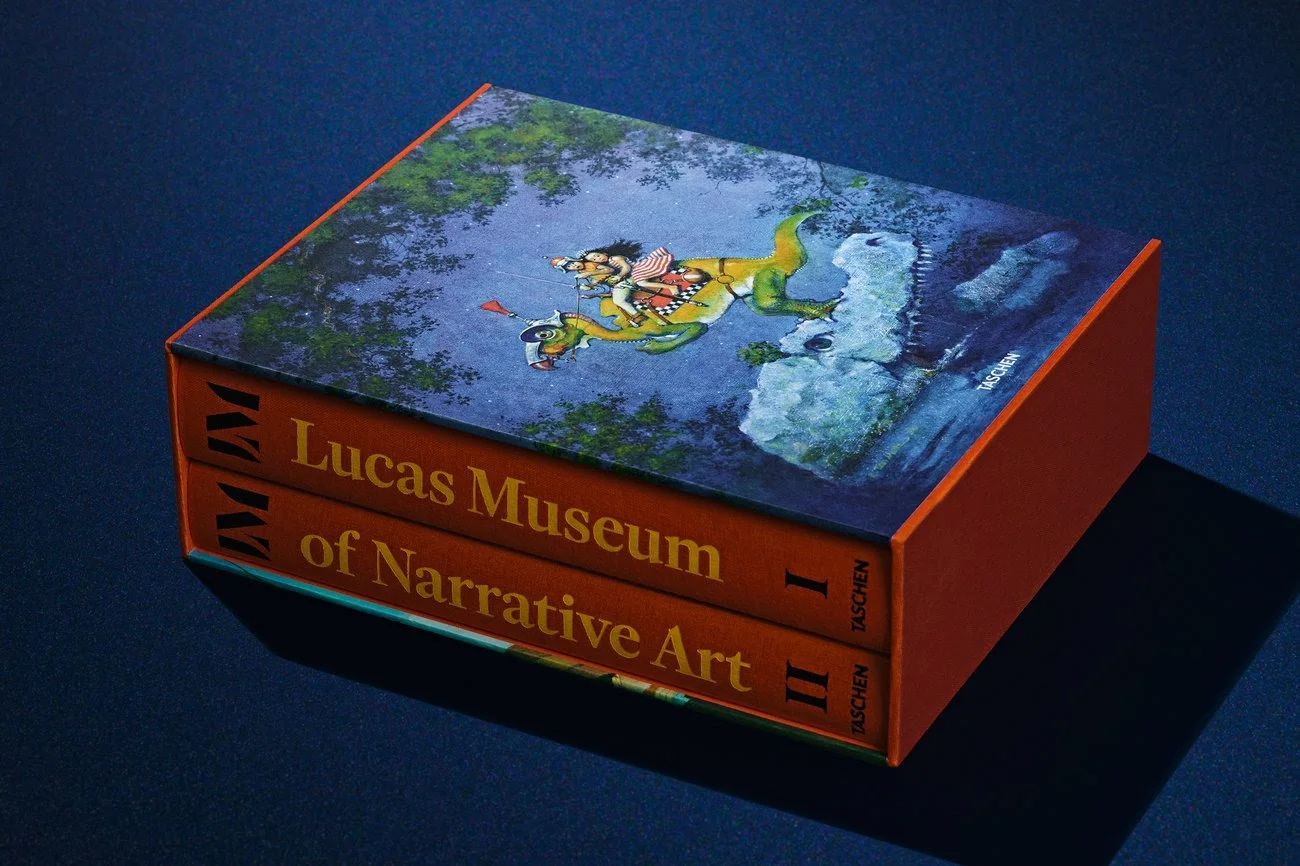
Throughout the collection, readers encounter works from an extraordinary group of artists and image-makers, including Thomas Hart Benton, Jessie Willcox Smith, Frank Frazetta, Maxfield Parrish, Norman Rockwell and N. C. Wyeth. Rather than arranging the material strictly by period or medium, the books are organized thematically, creating connections between artists and forms that might traditionally have been considered separately.
That approach is particularly significant to the Museum’s larger mission. An illustration created for a book, a painting, a photograph, a comic panel and an image conceived for the screen may originate from entirely different creative traditions, but each can perform the same fundamental act: capturing a moment, communicating an idea and allowing an audience to enter another person’s imagination.
From Fine Art to a Galaxy Far, Far Away
Naturally, cinema occupies an important place within a museum founded by one of modern filmmaking’s most influential figures, and the publication devotes a dedicated section to the visual universe of Star Wars.
Original production artwork and concept paintings appear alongside costumes and vehicles, offering a closer examination of the creative process behind a saga that has influenced popular culture for generations. The material provides an opportunity to consider Star Wars not simply as a collection of finished films, but as the culmination of countless individual acts of visual creation.
Before a world reaches the screen, someone has to imagine what it looks like. Artists sketch environments that do not exist, designers determine how characters dress, craftspeople transform drawings into physical objects and filmmakers bring those individual contributions together into a coherent universe. By placing those materials within the broader context of narrative art, the collection illuminates the collaborative process through which an idea can eventually become part of our collective cultural memory.
That connection between popular imagery and traditional art forms is one of the most compelling aspects of the Lucas Museum itself. Lucas has spent decades championing forms of visual expression that have not always received equal recognition within conventional art institutions, particularly illustration, comic art and cinematic imagery. The Museum creates a permanent home where those works can be considered alongside other artistic traditions without requiring one form to diminish another.
A Museum Built Around the Power of Story
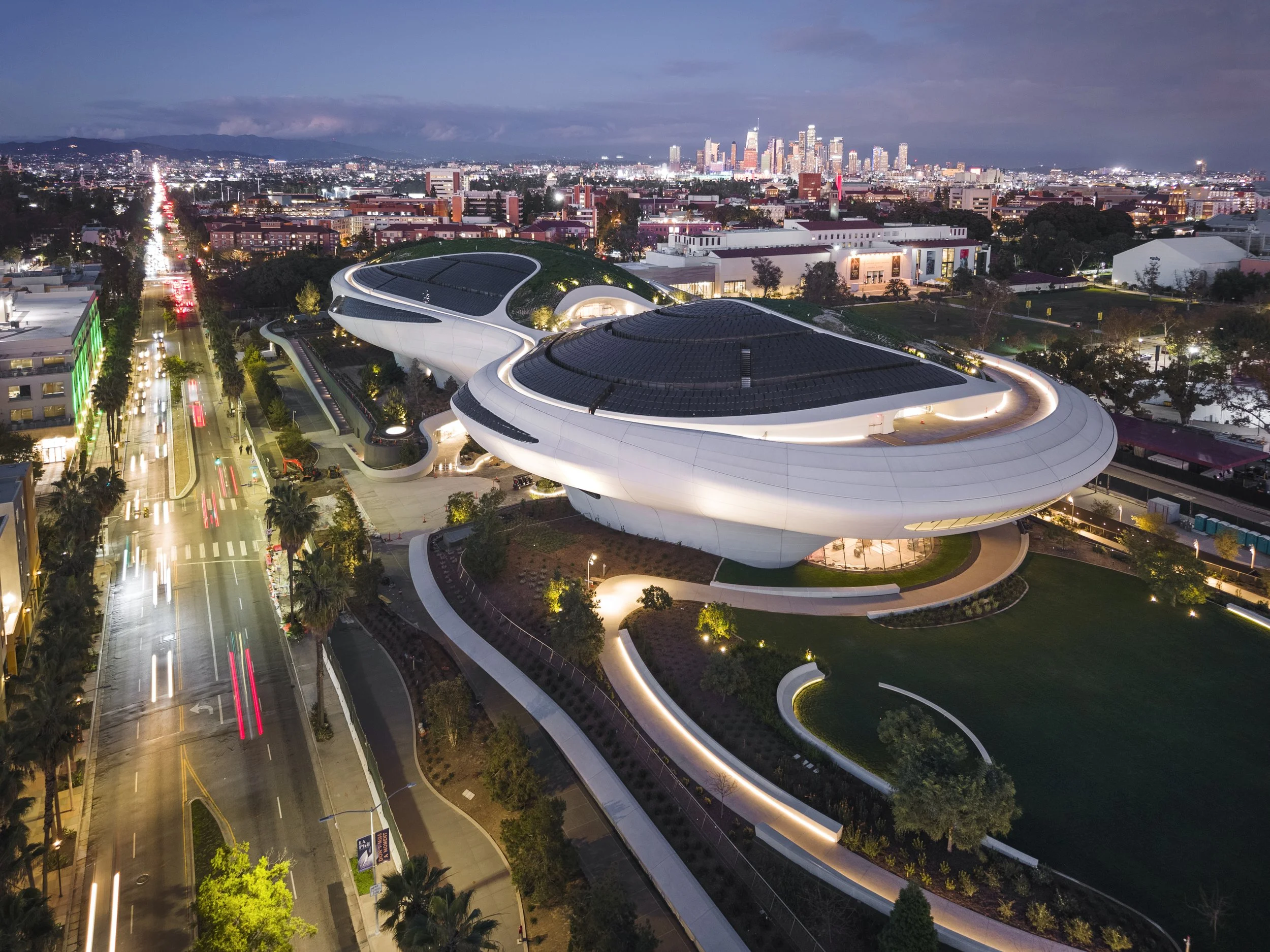
The publication arrives as anticipation builds around the opening of the Lucas Museum of Narrative Art in Los Angeles’ Exposition Park, where the institution will occupy a striking five-story, 300,000-square-foot building designed by Ma Yansong of MAD with Stantec.
Even the architecture has been conceived to evoke the emotional possibilities of storytelling. The sweeping structure sits within a 13-acre campus that includes a park designed by Mia Lehrer of Studio-MLA, expanding the experience beyond galleries and creating an outdoor gathering place for visitors and surrounding communities.
Inside, the Museum’s scope stretches from some of humanity’s earliest forms of visual communication through contemporary screen culture. Prehistoric imagery can exist within the same institutional philosophy as illustration, photography, painting, comics and cinema because the emphasis is not simply on how an image was created, but on what that image communicates.
It is an ambitious proposition at a moment when visual storytelling has arguably never been more pervasive. We encounter images constantly, moving between cinema screens, televisions, books, advertisements, photographs, social platforms and countless other forms of communication. The Lucas Museum invites audiences to consider that relationship more deliberately and to recognize visual storytelling as a tradition extending far beyond any particular technology or period.
Three Editions, One Expansive Story
TASCHEN brings its reputation for meticulously produced art books to the collaboration, with the two-volume Classic edition serving as the definitive expression of the project. Image reproduction, scale, paper and printing have been given particular attention, creating an edition designed to function as an art object in its own right.
The collection will also be available as The 45 edition, providing the material in a more compact format. A miniature Piccolo edition will be offered exclusively through Lucas Museum retail locations, creating three distinct ways to experience the project.
The different formats are appropriate for a publication concerned with the accessibility and universality of images. While the scale may change, the central story remains the same: human beings have always used pictures to communicate experiences that words alone cannot completely contain.
Opening a New Chapter in Los Angeles
For Lucas, whose Star Wars and Indiana Jones franchises transformed cinematic storytelling and whose work through Lucasfilm and Industrial Light & Magic helped redefine what filmmakers could place on screen, the Museum represents something larger than a retrospective of his own career. Alongside Hobson, he has created an institution intended to examine the much broader lineage from which those films emerged and to celebrate generations of artists whose images have shaped culture.
The involvement of del Toro feels especially fitting. His own films, including Pan’s Labyrinth, The Shape of Water and Frankenstein, reflect a lifelong fascination with monsters, mythology, history, beauty and the emotional possibilities of imagined worlds. Like Lucas, he has consistently championed the artists and craftspeople responsible for bringing those worlds to life.
Together with Linkof and the many artists represented throughout the collection, their contributions reinforce the idea at the heart of both the books and the Museum: visual storytelling does not belong to one era, medium or definition of art.
It belongs to all of us.
When the Lucas Museum of Narrative Art opens on September 22, Los Angeles will gain more than another cultural institution. It will gain a museum devoted to examining why we create images, why certain images remain with us and how stories told visually can travel across time, geography and generations.
With its accompanying TASCHEN collection, that conversation can continue long after visitors leave the galleries.
For a museum built around the enduring power of stories, it feels like an appropriate beginning.