Digger Is Funny Until You Realize the Joke Is Power Without Consequence
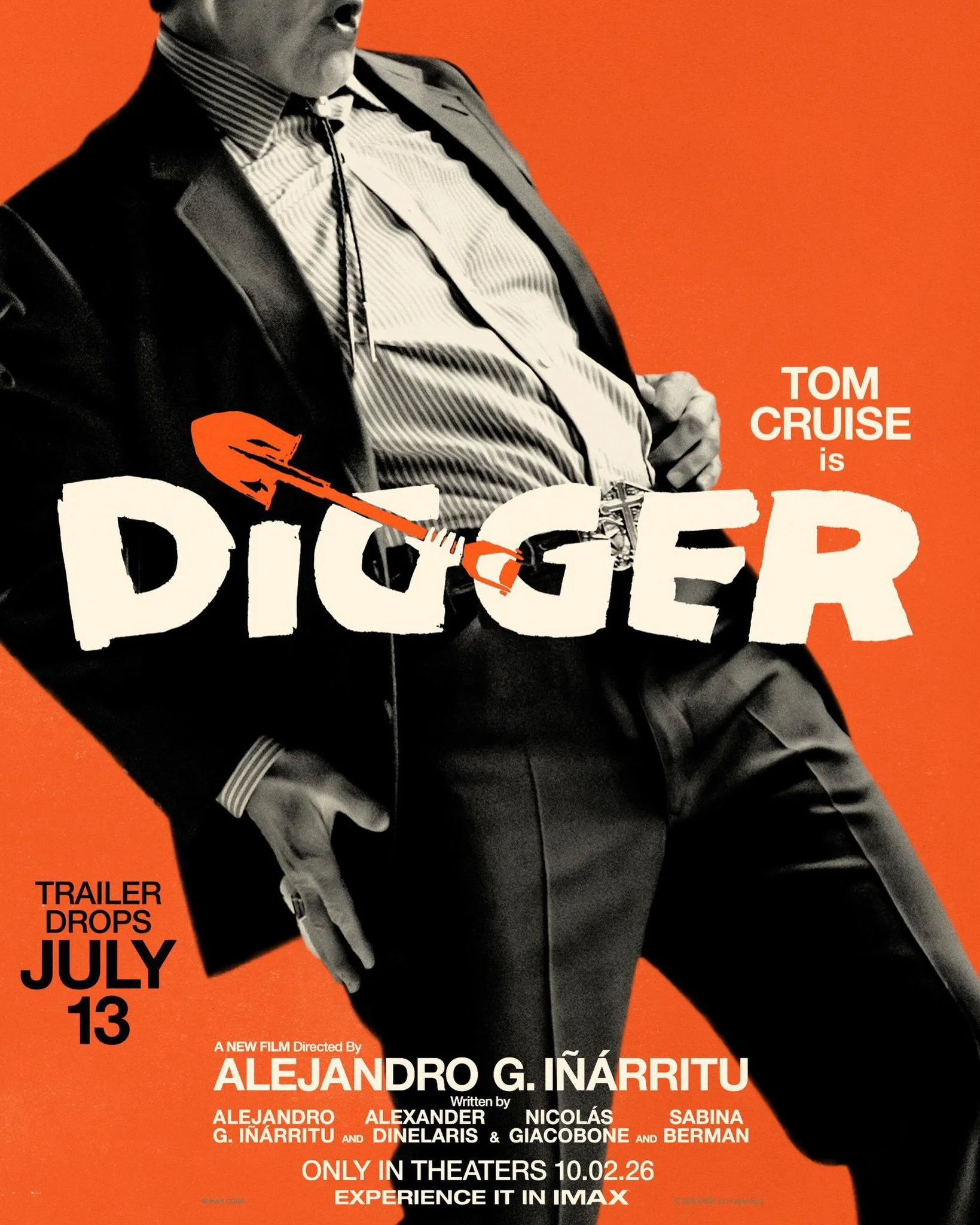
Alejandro G. Iñárritu’s Digger uses absurdity, wealth and satire to ask a much larger question about the people who shape the systems the rest of us are forced to live inside.
Digger asks a question far more uncomfortable than whether the ultra-rich are good or bad people: What happens when people with enormous power become detached from the consequences of the systems they manipulate?
That is what stayed with us after watching Alejandro G. Iñárritu’s latest film. For all of its absurdity, comedy and deliberate excess, Digger becomes most interesting when you stop treating its world as a caricature and recognize how familiar its underlying power structure actually is. Extreme wealth is merely the entry point. The more consequential subject is insulation, the extraordinary freedom that comes with being able to make decisions capable of affecting countless lives while possessing enough money, access and influence to remain protected from many of those decisions yourself.
And that distinction matters because Digger does not require us to believe that wealth itself is inherently sinister. Money is not the villain. Success is not the villain. Ambition is not the villain. The tension exists in what happens when wealth becomes concentrated enough to create its own ecosystem, one in which enormous power can operate without meaningful proximity to consequence.
That is where the satire starts feeling considerably less ridiculous.
For generations, there has been an expectation, sometimes romanticized and certainly never universally practiced, that extraordinary wealth carried some responsibility of stewardship. Build the institution. Fund the museum. Establish the foundation. Create the library. Support the university. Preserve the land. Endow something capable of surviving you. The bargain was never particularly democratic, but embedded within it was an idea that accumulating more than one person could ever reasonably consume created some obligation to the society that made such accumulation possible.
Digger forces a more contemporary question: What happens when accumulation no longer produces stewardship at all?
What happens when the objective is simply more?
More capital. More control. More influence. More access. More ability to redesign the environment around you.
Eventually, money stops functioning merely as money and begins functioning as architecture. It determines who gets through the door, whose ideas become policy, which failures are survivable, who receives another opportunity and, perhaps most importantly, who can make a mistake without experiencing the consequences the way everyone else would.
Follow the Rich White Man
There is a ridiculous line from Rush Hour that has lived in pop culture for decades. Chris Tucker’s Carter, attempting to solve a problem with the kind of logic only Carter could deliver, offers a wonderfully blunt strategy: “Follow the rich white man.”
It is funny because it is Chris Tucker.
Strip away the joke, however, and there is a remarkably durable principle underneath it.
Follow the money.
Follow the access.
Follow who benefits.
Follow who gets invited into the room.
Follow who can change the rules governing the room.
And then follow who gets to leave before everyone else experiences the consequences.
That is the trail Digger invites us to notice. Not because every wealthy person is secretly plotting society’s destruction, but because concentrated wealth produces concentrated power, and concentrated power deserves examination precisely because the people exercising it may never experience the systems they alter in the same way as everyone else.
The person changing a healthcare system may never worry about affording healthcare. The person reshaping a labor force may never wonder whether next month’s rent can be paid. The person influencing housing may never face displacement. The person deciding that a company must become “more efficient” may never meet the thousands of people whose jobs become numbers inside that calculation.
None of those decisions require a villain.
That may be the more disturbing point.
Nobody Has to Want the World to Burn
Popular culture has trained us to understand power through heroes and villains. There is comfort in that construction because villains announce themselves. Their motives are visible. Their intentions are clear.
Heath Ledger’s Joker in The Dark Knight famously represents something more nihilistic: someone Alfred describes through the observation that “some men just want to watch the world burn.”
But most consequential real-world decisions are not made that way.
Nobody needs to sit inside a penthouse plotting chaos.
People can genuinely believe they are being rational. They can believe they are maximizing shareholder value, modernizing an industry, disrupting an outdated institution, creating efficiency, protecting an investment or making the difficult decision everyone else was too timid to make.
And thousands of people can still be harmed.
Intent and consequence are not the same thing.
That is where Digger becomes more useful as cultural commentary than as a simple rich-people satire. It asks us to consider the possibility that immense damage can emerge from perfectly rational behavior inside a system whose incentives have become detached from ordinary human consequence.
A person does not have to wake up intending to destroy a community to make a decision that destroys one.
They only have to be far enough away from it.
Power Changes the Distance
The most consequential privilege wealth provides may not be luxury.
It may be distance.
Distance from waiting.
Distance from bureaucracy.
Distance from instability.
Distance from bad schools, unsafe neighborhoods, inadequate healthcare and economic shocks.
Distance from the consequences of being wrong.
Most people experience systems directly. When rent rises, they feel it. When groceries increase, they adjust. When insurance disappears, they scramble. When a company restructures, somebody has to explain to a family why the paycheck stopped.
At the highest levels of wealth and power, those same events can become abstractions.
Markets.
Headcount.
Optimization.
Assets.
Liabilities.
Strategy.
That language is not inherently malicious. It becomes dangerous when human consequences disappear inside it.
And Digger, beneath all of its comic exaggeration, understands the absurdity of that distance.
Wealth and Stewardship Are Not the Same Thing
It is tempting to assume that extraordinary achievement produces extraordinary wisdom. Our culture frequently does.
Someone builds an enormously successful company and suddenly we want to know their thoughts on education, government, transportation, media, medicine, cities and human civilization itself.
But expertise does not automatically transfer simply because capital does.
Neither does stewardship.
A person can be brilliant at building wealth without possessing any particular wisdom about what society should become. Someone can be an extraordinary entrepreneur and a terrible custodian of institutions. Someone can possess enormous resources and feel absolutely no obligation to preserve anything beyond his or her own interests.
That doesn’t make wealth immoral.
It makes stewardship a choice.
And perhaps that is one of the questions our current era has avoided for too long. We spend enormous amounts of time studying how fortunes are created and comparatively little time asking what responsibilities, if any, accompany the power those fortunes purchase.
Digger gives that question somewhere to live.
The Heroes and Villains Keep Changing
Every generation creates its own mythology around power.
Industrialists became robber barons or philanthropists, sometimes both. Financiers became masters of the universe until the universe sent an invoice. Technology founders became visionaries capable of “changing the world,” a phrase that sounds considerably more complicated once someone actually acquires the resources to do it.
The costumes change.
The industries change.
The technology changes.
The language changes.
But the underlying question remains remarkably stable: What do human beings do once they acquire enough power to shape the lives of people they may never have to know?
That is the superhero question without the cape.
And perhaps that is why Digger works so well as satire. The exaggeration creates enough distance for us to laugh before recognizing that the central premise isn’t especially exaggerated at all.
There will always be people with more money, influence and access than others. There will always be institutions capable of shaping society. There will always be ambitious people attempting to acquire more power within them.
The meaningful question is what happens next.
Do you build?
Do you preserve?
Do you extract?
Do you protect?
Do you leave something stronger than you found it?
And when your decisions alter the lives of people who will never have the opportunity to make decisions affecting yours, how much responsibility do you carry for what happens to them?
Digger doesn’t need to provide a clean answer. The better satire rarely does.
It simply places the absurdity in front of us long enough for the laughter to become recognition.
Because the names change.
The game stays the game.