Paramount and Warner Bros. Will Become Skydance. The Bigger Question Is What Happens to the People Who Create the Stories
As David Ellison prepares to place two of Hollywood’s most historic studios under the Skydance corporate banner, the conversation extends beyond a new name. For creators, producers, talent and IP owners, consolidation can fundamentally change who holds the power behind the screen.
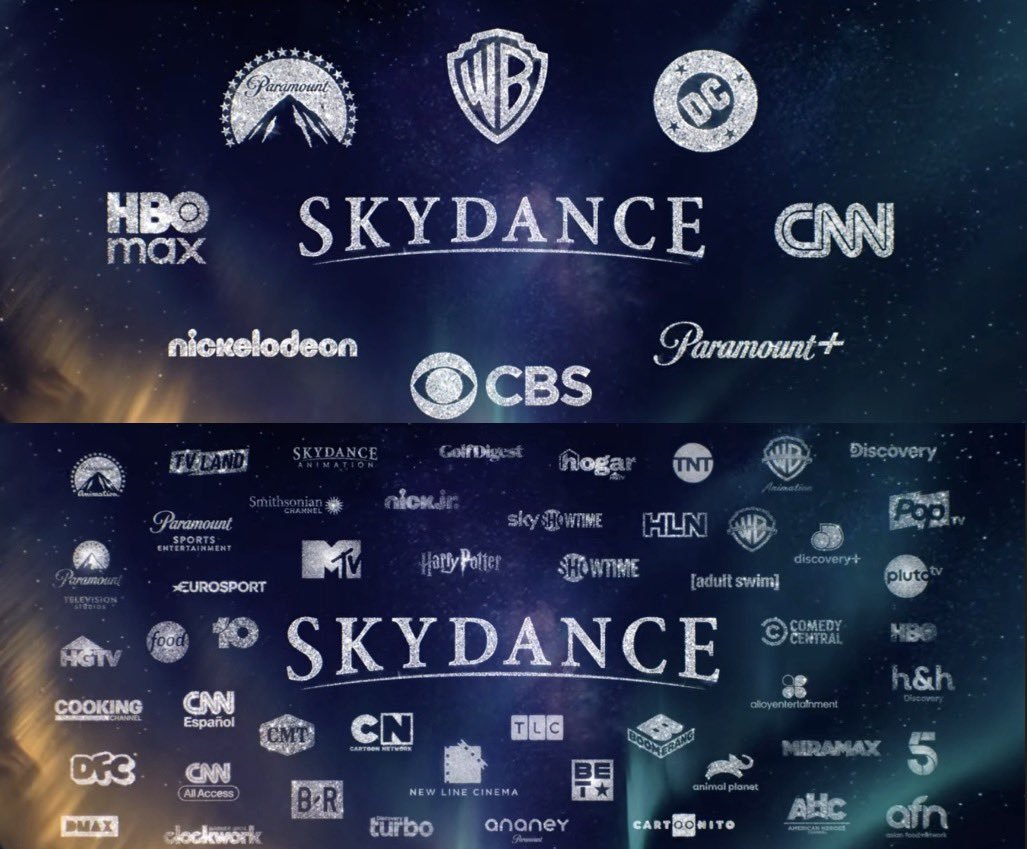
On October 6, one of the largest reorganizations in Hollywood history is expected to become official. Paramount Skydance’s acquisition of Warner Bros. Discovery is scheduled to close, bringing two century-old studio legacies, along with an enormous collection of film, television, streaming, news and intellectual property assets, under a single corporate parent. On Friday, David Ellison revealed what that parent company will be called: Skydance.
The announcement is symbolically significant. Paramount will remain Paramount. Warner Bros. will remain Warner Bros. Ellison has framed the decision as a way of preserving those individual identities while creating a corporate name above them. But names are ultimately the easiest part of a merger. The considerably more consequential question is what happens underneath them.
Because Hollywood consolidation changes much more than the logo at the top of the organizational chart.
It can change who greenlights a film. Who has veto power. Which projects receive priority. Which ones sit on a shelf. Who controls distribution. How aggressively something is marketed. Which existing relationships survive a restructuring. Which intellectual properties become essential to a larger corporate strategy. And, ultimately, how much leverage remains with the creators whose work gives all of those assets their value in the first place.
That is where the Paramount-Warner Bros. story becomes much larger than a $110 billion transaction.
An Extraordinary Collection of Storytelling Power
When Paramount announced its agreement to acquire Warner Bros. Discovery in February, the company described the combination as one designed to expand consumer choice and empower creative talent. Its own announcement pointed to a portfolio containing franchises including Game of Thrones, Mission: Impossible, Harry Potter, Top Gun, the DC Universe and SpongeBob SquarePants.
Those titles illustrate the extraordinary scale involved, but franchises alone don’t adequately describe it.
The combined organization brings Paramount Pictures and Warner Bros. into the same corporate structure alongside CBS, HBO, CNN, Paramount+, HBO Max and an enormous collection of television networks, production operations and libraries. The acquisition has now cleared the regulatory requirements necessary to proceed, following reviews across dozens of jurisdictions and the resolution of an antitrust lawsuit brought by 12 states.
Paramount argues that scale can produce opportunity. Earlier this year, responding to industry opposition to the transaction, the company said the combination could create “more avenues for their work, not fewer,” allowing the company to greenlight more projects and support talent across different stages of their careers.
That is one possible outcome.
But scale also concentrates decision-making power, and Hollywood’s creative community has been asking what that concentration means from the other side of the table.
More than 1,000 entertainment-industry figures signed an open letter opposing the transaction earlier this year, raising concerns about competition and creative opportunity. The states that challenged the deal similarly argued that combining the companies could reduce competition in film and television. Paramount disputed those concerns, and regulators around the world ultimately cleared the transaction.
The deal may be legally cleared.
The creative questions remain.
Who Are You Actually in Business With?
Hollywood has always been built on relationships.
A producer develops a history with a particular executive. A filmmaker knows which studio understands the kind of stories they want to tell. A production company negotiates a first-look agreement. An actor builds trust with a team. An independent IP owner chooses a partner because of what that partner promises to do with the property.
Those relationships can take years to establish.
Then a merger happens.
Suddenly, the executive who championed a project may report to someone different. Two departments that previously competed for material may become one. Two development slates may overlap. Distribution strategies can change. Marketing organizations can be consolidated. Projects that made perfect sense within one corporate structure may look very different when measured against the priorities of a much larger organization.
That does not automatically mean those projects disappear. It means the equation changes.
And creators deserve to understand the new equation.
That question becomes especially important when intellectual property is involved. In modern Hollywood, IP is not simply a movie or television show. A successful property can become theatrical releases, streaming series, consumer products, games, licensing opportunities, experiences and decades of extensions that may never have been contemplated when the original creator first put an idea on paper.
The person who owns that idea therefore isn’t merely negotiating today’s project.
They may be negotiating tomorrow’s ecosystem.
Consolidation Changes Leverage
There is another basic reality that deserves attention.
When studios compete for talent and material, creators have choices.
A filmmaker can take a project elsewhere. A producer can compare offers. An actor can consider competing packages. An IP owner can decide which company offers the strongest combination of money, distribution, marketing and creative protection.
When two potential buyers become one organization, some of that competitive landscape necessarily changes.
That doesn’t establish what will happen to any particular creator or project under Skydance. The new company could use its enormous scale to finance work that might otherwise struggle to exist. Its combination of theatrical, television, streaming and international distribution could give creators an extraordinary platform. Paramount has explicitly argued that the merger will produce precisely those kinds of opportunities.
But the inverse question deserves equal scrutiny: When fewer companies control more of the marketplace, where does a creator go when the answer from one of them is no?
That isn’t an argument against a particular company.
It is a question about the health of an ecosystem.
The People Behind the IP Matter Too
Hollywood has spent the last decade rediscovering something creators have always understood: intellectual property begins somewhere.
Before something becomes a franchise, it is an idea.
Before an idea becomes an asset on a corporate balance sheet, somebody creates it.
And as studios increasingly organize themselves around enormous libraries of recognizable IP, there is a danger in discussing those properties exclusively as assets rather than creative work attached to writers, directors, producers, actors and, in many cases, original rights holders.
Ownership determines enormous amounts about what happens next.
Who can remake something?
Who can license it?
Who determines whether it continues?
Who decides where it lives?
Who controls how audiences encounter it?
And who participates financially when something created years earlier suddenly becomes valuable again?
Those questions become more important, not less, as entertainment companies grow larger.
A New Name Doesn’t Answer the Old Questions
Ellison’s decision to call the combined company Skydance makes the hierarchy unusually clear. A company he founded in 2010 will now sit above Paramount and Warner Bros., two institutions whose histories stretch back more than a century. The symbolism is difficult to miss, even as the individual studio names remain intact.
There is also an enormous practical challenge ahead. The combined company is expected to pursue billions in cost savings while integrating sprawling businesses, leadership structures and creative operations. Ynon Kreiz, who led Mattel through its transformation into a more aggressive IP and entertainment company, has been named co-CEO alongside Ellison. Kreiz is expected to concentrate heavily on operations and integration, while Ellison focuses on strategy, creative direction, talent relationships and capital allocation.
That division of responsibility tells us something about the scale of what begins next week.
It does not yet tell us what the creative culture will become.
And that may ultimately be the story worth watching.
Hollywood mergers are usually announced in the language of scale, efficiencies, synergies, libraries, subscribers and global reach. Those measurements matter. Companies have to make money, compete and adapt to an entertainment business that has been fundamentally transformed by streaming, technology and changing audience behavior.
But movies and television aren’t manufactured solely by balance sheets.
Someone still has to have the idea.
Someone has to write it.
Someone has to fight for it.
Someone has to convince an executive to say yes.
Someone has to protect what makes it distinctive after that yes arrives.
And somewhere inside an organization large enough to contain Paramount, Warner Bros., HBO, CBS and generations of intellectual property, someone will still have the authority to say no.
So as Paramount and Warner Bros. prepare to enter the Skydance era, the most interesting question isn’t whether the names remain on the studio gates.
It is who will hold the keys, who will have a seat at the table, and what happens to the people who created everything valuable enough to put behind those gates in the first place.