JAŸ-Z IN 8 Premieres as an Intimate Oral Memoir Told Through His Music
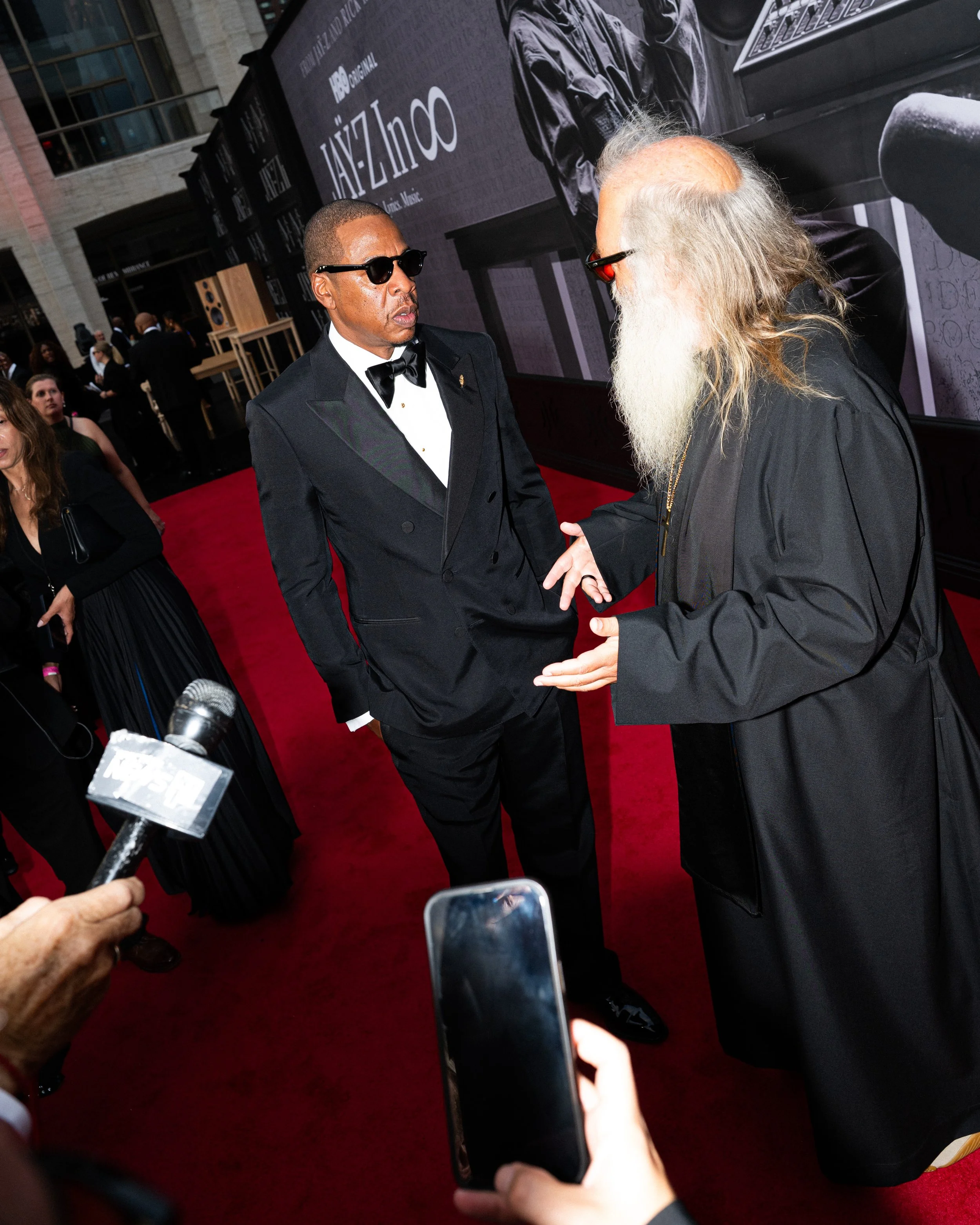
Ahead of its September 18 premiere, Xposure previews the opening episodes of the eight-part limited series, where JAŸ-Z and Rick Rubin return to the records to uncover the memories, relationships and experiences that shaped the man and the music. Xposure Magazine was granted advance access to the complete eight-episode series, allowing us to experience the full arc ahead of its debut. Our coverage begins with Episodes 1 and 2, with more to come each week as JAŸ-Z IN 8 unfolds.
For nearly three decades, JAŸ-Z has been telling us who he is through music. His catalog has become a cultural archive of its own, studied for double meanings, business lessons, street codes, historical references and autobiographical details by generations of listeners who understand that a Shawn Carter lyric rarely ends where the rhyme does.
Beginning September 18, JAŸ-Z IN 8 gives us something different. Across the new eight-part limited series, JAŸ-Z sits with Rick Rubin and returns to his catalog not simply to revisit the music, but to examine the life surrounding it. After its first two episodes, one thing becomes clear very quickly: this is not a greatest-hits retrospective. It feels remarkably close to an intimate oral memoir told through the music.
The music provides the structure, but memory becomes the story. Songs open conversations about childhood, family, poverty, ambition, friendship, grief, hip-hop, business and the decisions that transformed Shawn Carter into JAŸ-Z. Some stories provide context to lyrics listeners have known for decades. Others reveal that JAŸ-Z himself now understands certain moments differently than the young man who originally lived and wrote them.
Episode 1 begins appropriately with “The Dynasty Intro,” immediately establishing the rhythm of the series. Rubin is less interested in asking JAŸ-Z to explain what everyone already knows than in slowing him down long enough to explore what sits underneath the words. A lyric becomes a memory, a memory becomes a conversation and, occasionally, the conversation leads somewhere even JAŸ-Z does not appear to expect. That is where JAŸ-Z IN 8 becomes particularly compelling.
The first episode moves backward into the Carter household, where music was part of the infrastructure of family life. JAŸ-Z remembers the record collection his parents carefully maintained, filled with artists including Prince, Michael Jackson, Stevie Wonder, the Ohio Players and The O’Jays. His mother, Gloria “Lulu” Carter, labeled her records, while his father labeled his. “It was the center of our universe,” JAŸ-Z remembers. Those memories provide an unexpectedly intimate foundation for understanding the artist who would emerge years later. Before the albums, businesses, stages and mythology, there was a child absorbing records and eventually filling pages with his own rhymes.
The conversation also explores how dramatically different the possibilities surrounding hip-hop once looked. JAŸ-Z remembers a period when becoming a rapper could appear less financially promising than the street economy surrounding him. Rap had not yet become the global commercial force we understand today, and choosing music required believing in a future that did not yet fully exist. Even his original ambitions sound almost impossible from the perspective of 2026: make one successful album, then eventually operate a company. “I’ve always thought like a businessman,” he tells Rubin. Thirty years of hindsight make that sentence land differently.
By the time Episode 1 reaches “Hard Knock Life (Ghetto Anthem),” the series has quietly established the circumstances that created the writer before arriving at the artist the world would eventually know. It is not simply a journey through the catalog. The records become markers along a much larger story about how environment, instinct, talent and circumstance converged.
Episode 2 begins from a completely different vantage point with “What More Can I Say.” Now the conversation is less about becoming JAŸ-Z than navigating what happened after success arrived. The episode moves through The Black Album, the evolution of the music industry and JAŸ-Z’s belief that streaming ultimately revealed something hip-hop already understood about itself: its enormous cultural popularity had not always been accurately reflected by the institutions deciding what received radio play, television exposure or industry attention.
There is an interesting contradiction in that freedom. Hip-hop can be enormously popular and still not always be deeply heard. The form is dense with information, including names, history, slang, autobiography, coded language and cultural references that can disappear beneath production and hooks. JAŸ-Z IN 8 slows the records down long enough for those layers to surface, allowing JAŸ-Z to explain not only how certain songs were constructed, but the lives being lived around them.
That becomes especially compelling when he returns to “Brooklyn’s Finest” and The Notorious B.I.G. What begins as a conversation about making the record becomes something warmer and considerably more personal. Asked what he remembers about Biggie, JAŸ-Z’s first instinct is not to describe an icon. He remembers the person: funny, relatable and human. Their friendship developed quickly, and one memory involving Biggie’s thoughts about Atlanta is particularly fascinating from the distance of three decades. We won’t give that entire story away here. Atlanta will appreciate it when it hears it, and yes, we certainly did.
That ability to move between the mythology of hip-hop and the people who actually lived inside it is one of the strengths of these opening episodes. Rubin and JAŸ-Z can begin with the mechanics of a record and somehow arrive at family, friendship, fear, ambition or an understanding that only became possible years later. There is space in the conversation for JAŸ-Z to remember, but more importantly, there is space for him to reconsider.
Perspective becomes increasingly important as the premiere unfolds. At several points, JAŸ-Z revisits experiences he once understood one way and considers them through the knowledge he possesses now. The facts of a memory may not have changed, but the man interpreting them has. That distinction may ultimately prove central to JAŸ-Z IN 8 and to understanding why this particular examination of his catalog feels different from the countless conversations already surrounding it.
For nearly three decades, listeners have experienced these records through our own lenses. We attached memories to them, deciphered references, argued about bars and built cultural conversations around music JAŸ-Z released into the world and then largely allowed us to interpret. Now he gets to return with his own lens and show us what some of those moments look like from the other side of experience.
After two episodes, JAŸ-Z IN 8 does not feel interested in simply explaining the catalog. It is more compelling than that. The series is examining what happens when an artist returns to the life preserved inside his own work with enough distance to see things he could not see the first time.
There are six episodes still ahead, and Xposure will be following the conversation as the series unfolds. For now, the premiere gives us something deceptively simple: JAŸ-Z, Rick Rubin, the records and time. It turns out that is more than enough.
JAŸ-Z IN 8 premieres September 18.
Xposure Magazine extends our gratitude to our family at Roc Nation, HBO Films, HBO Max and Warner Bros. We look forward to continuing the conversation each week as JAŸ-Z IN 8 unfolds.