The Toys Grow Older — and So Do We: Toy Story 5 Trailer Confronts Time, Technology, and the Fear of Being Left Behind
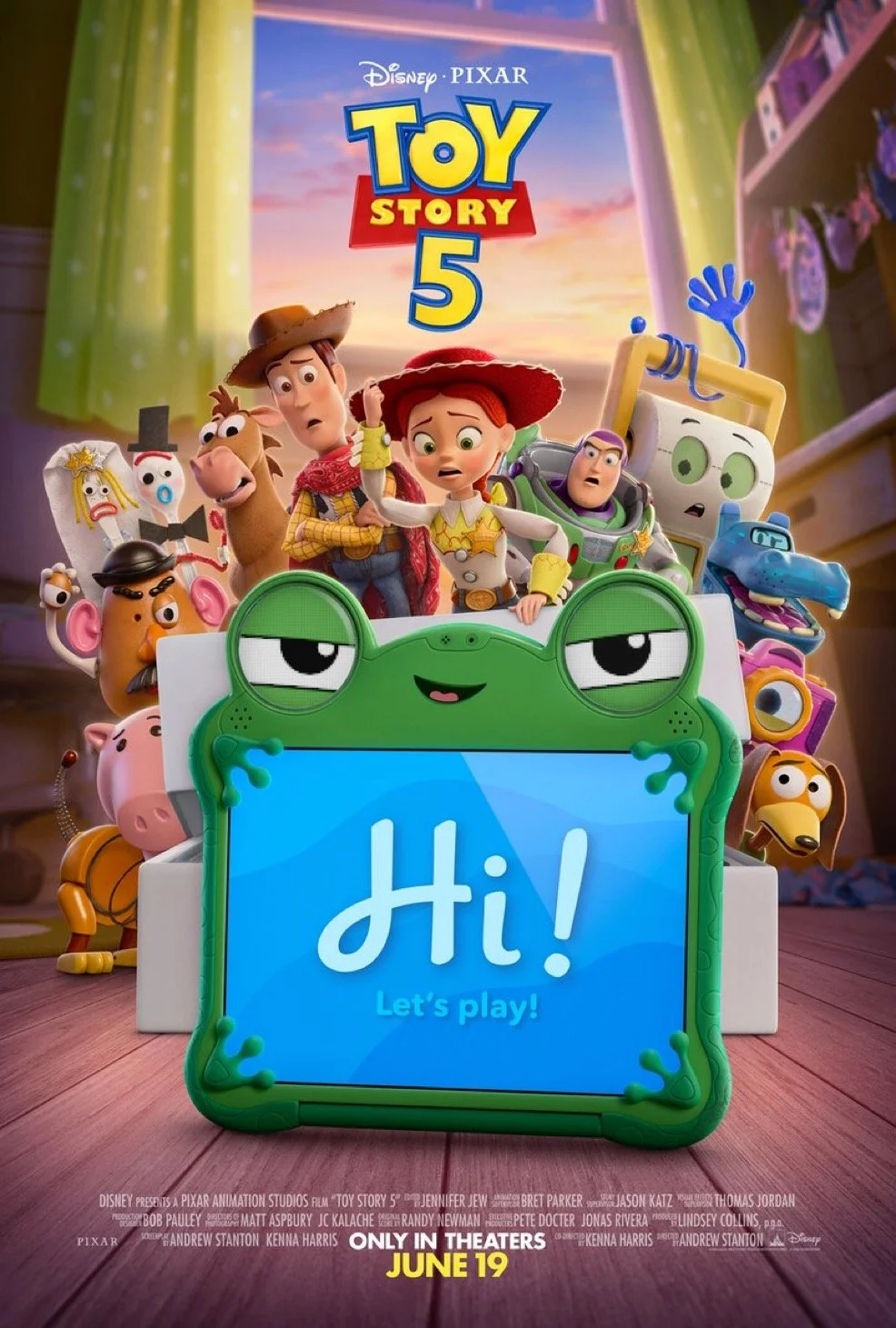
Pixar’s newly released trailer for Toy Story 5 doesn’t just tease another adventure — it quietly announces a thematic shift. The franchise that once asked whether toys feel love is now asking something far more existential: what happens when they outlive their purpose?
The footage reunites Woody and Buzz after their emotional separation at the end of Toy Story 4, bringing them back together as Bonnie’s toys face an unexpected rival — a sentient tablet named Lilypad, whose flashy features and endless stimulation threaten to replace traditional playtime. This new antagonist reframes the central conflict from external danger to cultural obsolescence. The enemy isn’t destruction. It’s irrelevance.
A New Kind of Villain: Progress
The trailer’s premise is deceptively simple: Bonnie, now eight, is increasingly captivated by technology, leaving her toys to wonder whether their role in her life is fading. In earlier films, the toys feared being broken, lost, or forgotten. Now they face something more modern and unsettling — replacement.
Pixar leans into this tension visually and emotionally. The digital world surrounding Lilypad is bright, seamless, and endlessly stimulating, while the toys themselves look tactile, worn, and real. Woody even appears slightly aged, sporting a bald spot and weathered details that emphasize time’s passage. It’s a subtle but striking choice: the characters aren’t frozen in nostalgia. They’re aging.
That creative decision transforms the story from a children’s sequel into a meditation on growing older in a world obsessed with the new.
Aging as the Franchise’s Final Frontier
From the beginning, Toy Story has always been about time. Andy grew up. Toys were donated. Friendships changed. But the fifth film appears to make aging its central thesis.
The tablet’s taunt in the trailer — calling Woody an “old man toy” — lands as both joke and thesis statement. It reflects a universal anxiety: the fear that usefulness has an expiration date.
This is where the franchise’s brilliance resurfaces. Pixar doesn’t treat aging as decline; it treats it as transformation. Woody’s return to help the group suggests that experience, not novelty, is what ultimately sustains connection. The toys’ crisis isn’t really about a tablet. It’s about identity — who they are if they’re no longer chosen.
Nostalgia vs. Relevance
The film’s premise echoes a larger cultural question. In an era dominated by algorithms, screens, and instant gratification, where does imagination fit? The trailer frames playtime itself as endangered, with the toys worried not just about themselves but about Bonnie’s social development and creativity.
That shift reframes the stakes. The toys aren’t simply fighting for attention. They’re fighting for a way of being — one rooted in tactile play, storytelling, and shared imagination.
It’s also a quietly bold move for Pixar. Rather than ignoring technological change, the film appears to confront it directly, asking whether progress inevitably erases the past or whether old and new can coexist.
Why This Story Still Matters
Set for theatrical release June 19, 2026, Toy Story 5 arrives nearly three decades after the original film changed animation forever. That timeline matters. Few franchises have aged alongside their audience as closely as this one. Children who watched Woody meet Buzz in 1995 are now adults confronting their own versions of the same question: what happens when the world moves faster than you do?
If the trailer is any indication, Pixar understands that its audience has grown up — and it’s meeting them there.
Because Toy Story has never really been about toys. It’s about time. And for the first time, the clock is the story.